
Mind-Control

http://www.gizmag.com/mind-controlled-prosthetic-fingers/41886/

Kelly Daescu

Scientists have generated a robotic hand that can move simply by the wearer willing it to. This is astonishing considering that the nervous system operates with such a great deal of precision and complexity. The existence of a device that can hijack our body’s electrical impulses seems like the plot of a science fiction movie.

Authentic nervous system signaling is driven by neurons that look like an electrocuted cell, coincidentally enough. Their cell bodies contain organelles like the nucleus, mitochondria, and ribosomes, and their cell membranes have a multitude of jagged projections called dendrites. Because dendrites detect extracellular activity, neurons have many in order to maximize sensation detection.

While dendrites are the message receivers and there are many, axons are message deliverers, and most neurons only have one. Axons are insulated wires surrounded by myelin sheaths that amplify the nerve impulse. The ultimate destination of an action potential is the synapse where neurotransmitters are released from the axon and received by dendrites of a neighboring cell.

Neurotransmitter secretions explain nervous system communication, but they don’t explain how the communication is initiated: the action potential. The action potential is an all or nothing response that is only executed when the cell membrane’s polarity changes due to a sodium ion influx and potassium ion out flux via the sodium potassium pump.

In an extraordinary accomplishment, scientists have found a way to circumvent this neural relay race into one single step using a computer-programmed prosthetic arm. The mind-controlled prosthetic was programmed based on brain mapping data that identified regions responsible for motor output and sensory input.

To obtain a brain map, scientists implanted electrodes into a patient’s brain and asked the patient to move his hand while simultaneously monitoring his brain’s electrical activity. This allowed them to identify specific regions involved in motor output. The same patient was later given a glove equipped with tiny vibrators. As different regions of the hand were stimulated, regions of the brain that received the sensory input were recognized. By elucidating the hand’s motor and sensory regions, scientists held the key to develop a mind-controlled device.

The device they engineered was a prosthetic arm connected to the brain by wires with electrodes. The prosthetic was programmed so that its movements were a function of the position-dependent electrode activation in the brain. With 76% efficiency, the individual could successfully move his hand. The efficiency increased to 88% if the pinkie and ring fingers were splinted together since those regions in the brain overlap.

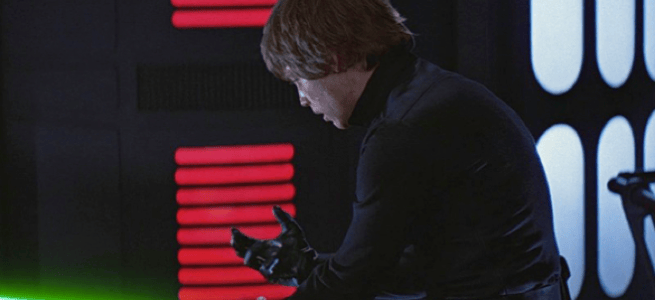
The overwhelming success of this prosthetic device proves that Luke Skywalker’s mind-controlled hand no longer exists in only galaxies far, far away. In fact, neuroscience, computer science, and bioengineering research advancements continue to legitimize science fiction.
Nerd Alert

My last post was a while ago, and it is because business is simply booming.  I haven’t been able to write as much because I have been living in the library researching in order to complete projects for my clients.  When I’m not in the library I am at home, and my cats now literally sit on my lap while I type.  And yes, I am not afraid to admit that I am a nerd and a cat lady.  The good news is that I am loving every minute of it.

Due to the diversity of experience I’ve been accumulating, I’ve decided to branch out in my blogging.  I changed the focus of the blog to “Science News and Communications” because it isn’t just going to be about biology anymore, and it isn’t just going to be about teaching.  From now on, I will just write from time to time when business is slow on whatever subject my heart desires.

The past few months, I’ve learned so much as I’ve been researching and writing.  Here are a few of my favorites.

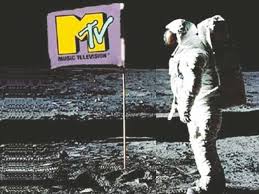
  • Astronomy: Tracing lineage is not as easy as one might think, but as far as I can tell based on names, dates, locations, and family histories, there’s a strong possibility I am distantly related to the guy who invented the radio telescope.  Even though Karl Jansky was such a big deal (he has a unit of measurement named after him), nobody knows about the guy.  So, I didn’t include him in my project.  I thought about it because writing about nebulas, black holes, and planets is really interesting, but I also wanted to make it “down-to-Earth” (pun intended).  Instead of the radio telescope, my proverbial pen veered into the history of NASA.  As I was reading, I remembered that NASA began pretty much as a flex to Russia during the cold war.  It isn’t a coincidence that Sputnik launched in 1957 and NASA opened its doors in 1958.  The coolest thing I discovered in my research was that Neil Armstrong’s words when he stepped foot on the moon in 1969 were misquoted (in 1969 they had more static I guess).  He actually said, “That’s one small step for [a] man, and one giant leap for mankind”.  The inclusion of that one letter “a” that was always left out totally changes its meaning for me.  It makes it more personal.  It links how just one action, one moment, one man, can change history.
  • Geology: In researching igneous rocks, moon phases, and earthquakes, my favorite part of the whole project was simply learning about clouds again.  One of the beauties of freelancing is that I get to walk my son home from school every day.  On a few of these walks, we played the game “name that cloud” until he got sick of it.  So then I tried to change it to “name the shape in the cumulus cloud”.  He got sick of that too.  I, for one, am not sick of it, and on my own walks and runs I still play – is that a cirrus cloud?  Cumulostratus?  Nimbus?  The only one I can get consistently is fog.
  • Surgical Procedures: Tailbone removal (coccygectomy) is actually a thing because some people have chronic pain to the point where surgery is their best option.  I’m so ambivalent about my tailbone, but indeed I remember hurting it like crazy as a kid when I landed on it wrong, so I can see why this procedure came about.  I had no idea such a procedure even existed before two weeks ago.  I’ve learned about so many medical procedures and new technology from these assignments that I had never known about.  Absolutely fascinating.
  • Quantum physics: This was the hardest project I have done so far.  I know all about electrons and their duality; they behave as particles while also behaving as light waves.  I was really confident going in because I am solid on atomic theory and structure.  However, this project went far beyond what I had expected and into the realm of Calculus.  It has been a while since I have taken an advanced math class.  Ay Caramba!  I actually had to watch MIT lectures on wave functions so that I could relearn it before writing about it.  I finished that 50 page monster today.

More to come…