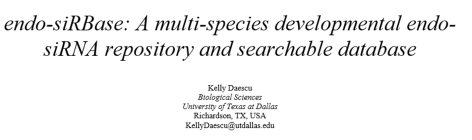
Three years ago I was a high school science teacher and curriculum writer with no programming experience. This weekend I finished developing a software that I am going to present at a computational biology conference in a few weeks. The last three years completely changed the trajectory of my career, and now that I have finished a single author paper that has consumed a tremendous amount of brainpower, I finally have the chance to sit down and blog – something I haven’t done since I started school.
Looking back to my first post in December of 2015, I am reflecting on the person I was then; a woman who loved teaching science but left the field in order to pursue a more technical career. From then until mid-2016, I started a business and worked from home, and my posts pretty much speak for themselves; my business started with curriculum writing but blossomed into medical blogging, writing test prep material, and science editing. I was doing all sorts of science consulting from the comfort of my own home.
I haven’t written since then because I returned to graduate school in order to gain skills that would help me in my business, which I thought was going to be easy because I already had a Master’s degree in biochemistry and molecular genetics; but molecular biology today is light years away from the molecular biology of 15 years ago.
Back then, I was attending graduate school right about the time when the human genome project ended. I worked in a breast cancer lab and did traditional lab work.
Fast-forward to 2016. I was ready to pick up where I left off and started working in a lung cancer lab. I kept hearing about the Cancer Genome Atlas (TCGA) which contains sequencing information for nearly 40 different types of cancer. Expression, genomic, and clinical data from thousands of patients can be accessed at firebrowse.org.
Once I found this goldmine of information, I devoted all of my time to analyzing TCGA data. For me it was a no brainer because patient data was far more valid then anything I could generate within a petri dish or test tube. Sure, there are many confounding variables that are hard to control when using patient data; however, the large sample sizes alleviated my reservations, so I jumped in.
Soon I expanded my data analytics from cancer to regulatory processes. While conducting research for a C. elegans (worm) lab, I was generating thousands of lines of code, and as I got more experienced, I spent enormous amounts of time writing functions to simplify my code. It was addictive – every time investment I made, I simplified some process so that something else became easier. Soon I had so many custom functions that I decided to publish an R package.
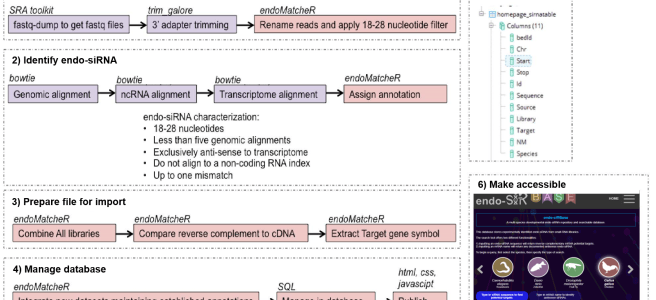
The details of my program can be found in my paper and are shown in the pipeline in the featured image, but what I am most proud of is that by initiating a collaboration with the computer science department, I was able to provide a tool that will help a lot of developmental biologists.
As this project closes, I am an author on another two papers that are being reviewed. One is on Prostate Cancer and the other is on Alzheimer’s Disease. I feel like the last two years of my life were spent gaining a variety of skills and knowledge, and the next two years are going to be spent focusing on my dissertation and applying them.
Until then…