Ecology and Problem-Based Learning

A typical ecology calendar looks like this:

  • Day 1: Food chains, webs, and trophic levels
  • Day 2: Organism niches and pyramids
  • Days 3-4: Carbon and Nitrogen Cycles
  • Days 5-6: Symbiosis
  • Day 7: Predator-Prey
  • Day 8: Ecological Succession
  • Day 9: Review
  • Day 10: multiple choice assessment

Paradigm shifting this traditional scope and sequence into a problem-based learning unit fosters student problem solving, independence, and engagement and can provide a meaningful learning experience if done correctly.  This post provides a roadmap to implementing an effective problem-based ecology project, and a successful project starts with a high functioning group.

Grouping:

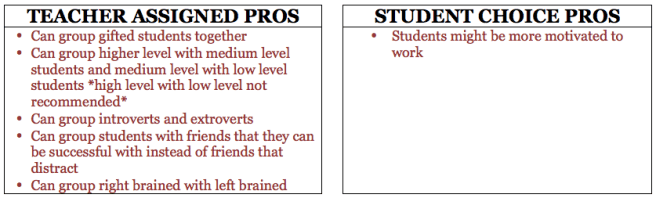
When I was a new teacher I never assigned groups because students practically formed them on their own the minute I said “project”.  Over time I learned that being deliberate about creating groups results in higher quality projects and more positive learning experiences.  The key to designing successful groups is to be intentional.  There is a school of thought that student choice is an integral part of learning, and while I agree that is true in some cases, I strongly believe that the benefits of teacher-assigned groups far outweigh those of student-chosen groups.
W

Transitioning from “Ecology Unit” into “Ecology Problem”  

Day 1: Ecology Introduction and Problem Assignment

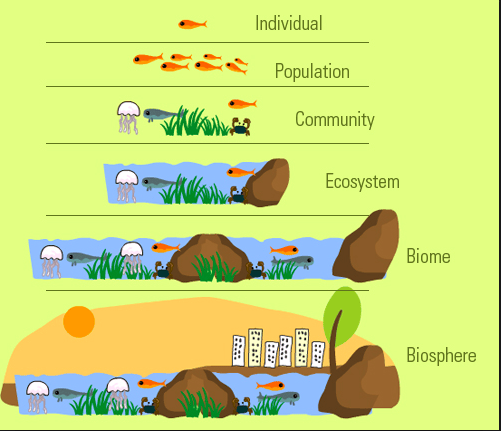
Introduce ecology by discussing the hierarchy of organization as seen in the picture below.  Ecosystems include more than just organisms, they  also include abiotic factors such as carbon, nitrogen, water, rocks, etc.
s

After the brief ecological hierarchy introduction, hand out envelopes to each team labeled “NASA: Operation Mars”

The envelopes should contain a piece of paper with the following explanation:

Mission

Your team is working for NASA to develop a plan for creating a city the size of Los Angeles that can sustain life on Mars.  NASA has contracted the project out to several ecology firms.  They want small firms to generate ideas then collaborate with other elite firms in ongoing summits.

**It is always fun to throw in pop culture, and this trailer can add a little humor before students get started.  Use discretion, it has one explicative.**


In the folder they will need the project schedule as shown below.  Note that it is ten days long, just as a traditional ecology unit would be.  There are research summits incorporated which provide an opportunity for work-checking, feedback, and instruction.  These summits are critical for scaffolding and making sure students are solid on the foundation before moving on to harder concepts.  I will discuss summit format after describing the project details.

 Student Project Schedule (sheet given to students)

Day 1:  In order for life to form, abiotic cycles such as the carbon and nitrogen cycle must be established.  Make diagrams of each cycle and be able to present ALL important vocabulary involving actions that remove the elements from the atmospheric bank and actions that return elements to the atmospheric bank.

Upon completion, you must discuss primary succession and describe why the abiotic cycles are necessary for it to occur.  Describe and discuss pioneer species and give several examples.  Describe and discuss the progression of trophic levels and a climax community.

Day 2:  Now that a climax community is established, describe every trophic level and organism niches in each level (include 20 organisms, keeping in mind that the goal is an urban ecosystem).  Include vocabulary such as decomposer, carnivore, secondary consumer, etc, and be sure to give several examples of each.  Each organism should be associated with at least two vocabulary words.

Design and illustrate three food chains with four trophic levels.  One food chain must be converted to a pyramid of energy, one food chain must be converted to a pyramid of numbers, and the final food chain must be converted to a pyramid of biomass.  Most pyramids will be in the typical triangle shape, although pyramid of numbers and biomass may not be.

Describe why energy pyramids must always be in the typical triangle shape and why numbers and biomass pyramids might look differently.  Make sure that one of your pyramids has an atypical shape and explain why it looks differently.

Day 3: Research Summit

Day 4: Food chains are a simplistic view of predator-prey relationships.  Food webs are much more complex and show all community predator-prey relationships.  Design and illustrate a detailed food web in the ecosystem that has at least 4 producers, 6 primary consumers, 4 omnivores, and 2 tertiary consumers.

Describe and give examples of decomposers, scavengers, and detritivores.  Are they shown in food chains and webs?  Why or why not?

Describe the 10% rule and the reason for it as well as its significance.

Finally, pick a predator-prey relationship and illustrate a 20 year predator-prey graph.  Describe the trends in the graph.

Day 4: Research Summit

Day 5: Food chains and webs show predation, but don’t show the other community interactions including competition and symbiosis (mutualism, parasitism, and commensalism).  Describe two examples of each type of interaction in the community that you developed.

Just for fun, here are my favorite mutualism and parasitism clips.  Each one has some great higher level questions that can be used in summits.  

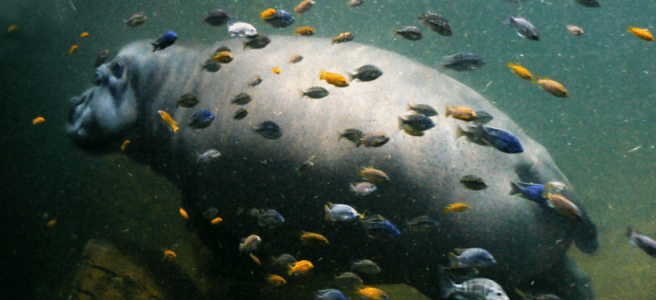
Regarding the mutualism clip – there is also a commensalism relationship shown.  What is it? (dung eaters don’t benefit hippo like the fish that clean it do)

Regarding the parasitism clip – how is parasitism similar and different to predation? (both parasites and predators kill, but parasites live on large hosts and feed on it without necessarily killing it)

Day 6:  A human brings DDT to the community in order to ensure better crop growth.  Discuss DDT – what is it, why is it harmful, and relate it to biomagnification and the term “biodegradable”.  Discuss other potential sources of biomagnification.

Discuss what would occur if the whole community was burned in a fire in terms of secondary succession.  What could be some other causes for secondary succession?

Day 7: Research Summit

Days 8-10: Final Proposal and Commercial

At this point, students have been exposed to all the targets regarding ecology and have had the opportunity for feedback and discussion.  Their job now is two-fold.

  1.  They need to create a comprehensive proposal discussing each task with an array of images.  It needs to be typed, bound, and beautiful.  The project must be complete at the end of class on day 9 so that on day 10 the teacher can visit with individual groups.
  2. They need to create a commercial to woo people to populate Mars.  Their commercial should highlight their ecosystem and fun things to do and generally convince people to leave Earth. The clip below might be good to show to give them some ideas.  An activity like this emphasizes ecology content while building technology skills.


Teacher notes

Problem-based units are different in that they are completely lacking any teacher large group instruction as well as lacking pencil and paper tests.  To effectively facilitate such a project, summits are critical for student understanding.

Summits

A summit should almost look like a socratic seminar.  It will look similar in that the whole class should be in a circle and it should be question based.  Teachers can still be the moderator and “grade” participation by keeping track of student contributions.  It will be different in that the teacher will lead the seminar via image analysis as opposed to philosophical questioning.  For example, perhaps an aquatic food web will be shown on the overhead.  The teacher can ask the large group, “Explain two facts or inferences about this picture”.  Students will raise their hands and sequentially discuss the diagrams in detail and bounce questions off of each other.  Discussion can go on for 10-15 minutes per diagram, and the teacher should serve as a facilitator (as opposed to a fountain of knowledge) while keeping track of time.  The students must educate each other and clarify the project with other “experts” at the summit who are performing the same task.  This exercise involves analysis with unfamiliar images of food webs, chains, trophic levels, abiotic cycle images, etc. and will stretch student thinking.

Teacher notes: Grading

For grading, I recommend 2 daily grades and a test grade.

Daily grades:

  1.  Summit Participation (5 or so meaningful contributions per summit for full points)
  2. On day 10, in teacher individual group visits, ask group members (at random) ten questions regarding their project.  For any questions that they cannot explain, deduct ten points.

Test grade:

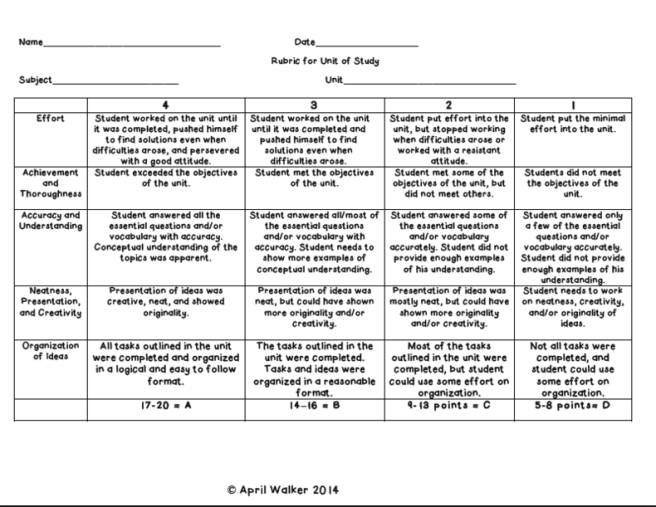
A simple rubric like this will make your life much easier than taking the time to grade every single word and detail.  You can develop your own or there are TONS of rubrics and resources on making rubrics on the internet.
Screenshot 2016-03-01 14.16.20 copy

Problem-based learning can be incorporated into any unit.  As I’ve shared in other posts, I absolutely believe in the lecture/student-note model of learning, but problem-based learning is just as powerful.  A classroom that incorporates both is serving our students best by equipping them with a variety of skills.



Superbowl, the Double Dip, and Seinfeld

Superbowl Sunday parties are a blast, especially when your team wins (ahem, Denver Broncos).  An article here utilized as a student warm-up can be an engaging introduction to a lesson on microorganisms and disease.   It has a pop culture component and links NFL “fun facts” to the flu, and it serves as a primer for complicated content.  If football is not your bag there are so many other opportunities for “fun” when introducing pathogens, and finding a pop-culture “hook” is well worth the time.

Students probably don’t know about Jerry Seinfeld and his crew of characters (I am aging myself, as this was a funny sitcom in the 1990s), but even without the prior knowledge, they will certainly find these little clips funny.  See clips 1, 2, and 3

Here is another humorous article that debunks a ridiculous notion that beards are disgusting bacteria-fests.

150505_SCI_BeardRed.jpg.CROP.promo-mediumlarge

However the pathogen unit is initiated, I highly recommend starting with something relatable and funny because the content is going to get downright “hairy” and far surpass student background knowledge.

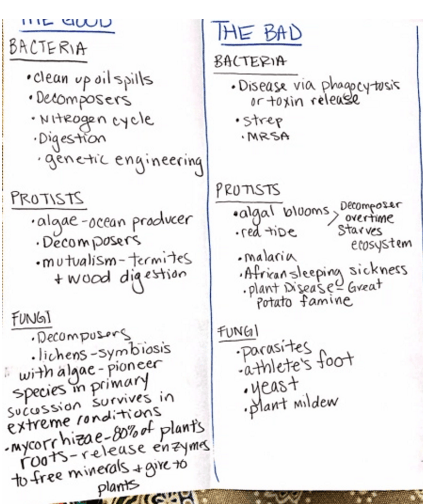
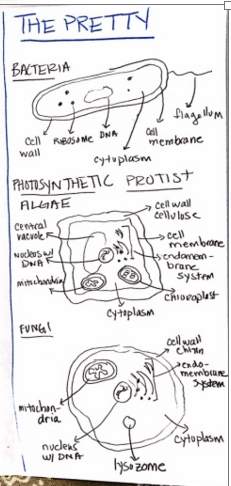
Following the quick introduction, content delivery comes next, and I direct students to complete a detailed foldable called “The Good, The Bad, and The Pretty”, meaning they have to identify beneficial microorganisms, detrimental microorganisms, and draw pretty and labeled pictures of them.  Their job is to read and extrapolate information from their textbooks, and yes, I still have students read from the textbook.  It is a critical life skill to read detailed information and not only to differentiate critical content from noise, but also to process the information by constructing unique explanations that aren’t verbatim duplicates of the source.  Many teachers veer away from the textbook because “students can’t or won’t do it”, but to deprive students of this skill is doing them a disservice.  Reading comprehension should not be the primary method of content delivery by any means, but it certainly should be weaved into the curriculum at conducive opportunities for student practice of this critical skill.

The foldable activity involves reading from the textbook, recording details in a graphic organizer-like chart, and designing comprehensive figures.  I give instructions that each panel needs to discuss Bacteria, Protists, and Fungi (viruses are not technically organisms so I don’t introduce them yet) in at least three bullet points that have 4 words or less.  I do not accept sentences or phrases copied from the book.  I tell students if they cannot break the point down into four words or less, then they need to process further until they can.  To differentiate for higher level students, I have modified their instructions so that every bullet point must have exactly four words, and that keeps them from finishing in 2 minutes while simultaneously reinforcing the material by requiring longer processing times.

Einstein

I also require students to draw a cell of each kingdom and label at least 6 structures in each figure.  I chunk this activity and have them work independently for 15ish minutes.  It is critical that at the beginning of this activity they use their own skill-sets and work independently.  After about 15ish minutes, I allow them to walk around the room to ask their peers questions and to look at other’s work for examples.  This is critical for modeling and differentiating because unfortunately there are students at the high school level that simply lack reading and extrapolating skills.  The opportunity for the weaker students to see models of high-quality work and for the stronger students to process content verbally, thereby reinforcing it, benefits both populations.  After the five minute break, students have 5-10 more minutes to incorporate information and complete their foldables, then lecture begins.  From start to finish, their work should look like this (except they should have pictures included).

1

Screenshot 2016-02-10 12.28.22 copy

Many teachers cringe at the concept of lectures because as technology is further incorporated into pedagogy (as it should be), old-school strategies are frowned upon. Lecture need not be  traditional “teacher talk & student copy” though.  Meaningful and highly effective presentations are deliberately designed with minimal words, image analysis, and the incorporation of appropriate processing breaks.  Like textbook reading, lecture should be integrated into any teacher’s classroom, not all the time, but occasionally, in order for students to practice note taking.  If students are not exposed to the art of listening to explanations and asking questions for clarification, they are missing a critical piece of education, which is to prepare them for life.

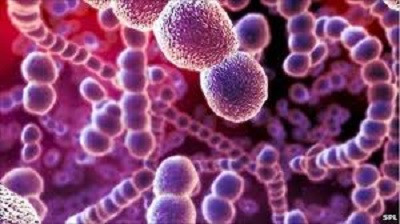
The foldable is my diving-board into the lecture, and I spend a lot of time making it engaging, like a ted-talk.  I start with a picture of bacteria like this one, focus on the details I want students to remember, and integrate memorable details, in this case maybe discussing a friend of mine’s mom who was in the hospital for over a month with a bacterial infection.  I deliver content without spoon-feeding them the words while taking the time to make sure that every student has the opportunity to include the details in their notes in case they missed them.

bacteria copy

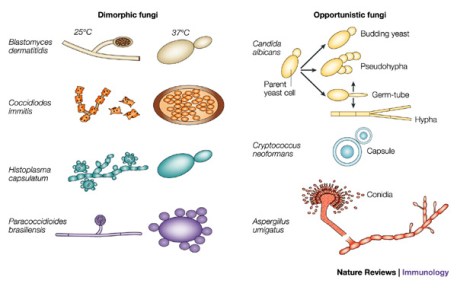
After bacteria, delivery of information on protists then fungus is the same, again giving every student the opportunity to fill in gaps and ask questions.

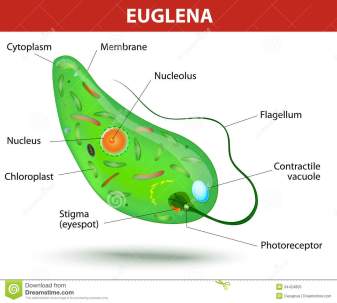
structure-euglena-anatomy-freshwater-protozoan-composed-chlorophyll-has-rudimentary-eye-vector-diagram-34424805nri1255-i1

Following lecture, to wrap up the lesson, a critical piece is to raise students to the analysis level, and figure analysis is one of the most effective closure activities in biology.  Sometimes I deliberately “mess-up”, and then use it to my advantage.  For example, at the end of this particular lecture I could post these foldable images and  ask students to identify two important points regarding each cell type, any goofs, and two possible interesting additions that could be added to each picture.  This analysis and extension involves small group discussion followed by an opportunity for me to stretch them for high quality answers in a large group discussion.

The students always wow me with what they notice and interpret.  In this type of activity, after hearing all of their answers, I reveal my thoughts as well, providing a nice wrap-up.

Screenshot 2016-02-10 11.58.46 copy.png

  • BACTERIA:
  • Important: no nucleus, prokaryotic like Archae, super small
  • Goof: Bacteria have very large circular central chromosomes in the nucleoid region, the smaller circular DNA are plasmids
  • Extension: Could add bacteriophage infecting it
  • PROTIST
  • Important: eukaryote so way larger and more complicated than bacteria, mostly single celled
  • Goof: This is obviously a plant cell due to its square shape and cell wall of cellulose.
  • Extension: Should have animal-like, plant-like, and fungus-like all in picture
  • FUNGUS
  • Important:  heterotroph and should never have a chloroplast
  • Goof:  over-simplified cell missing some structures
  • Extension:  Could draw multi-cellular mushroom with hyphae and mycelia


This post discussed the importance of note-taking and lecture style.  The next one will include more details on student notes as well as a lecture an example via Google Slides.

Bacteria: antibiotics, asexual, ambiguous

As my blog’s intended audience is biology educators, as always, I will pepper my discussion with resources I have used in the classroom that have facilitated student understanding and success.  This post will focus on the most prevalent prokaryotes, the kingdom Bacteria.  It will discuss how antibiotic resistance is an example of natural selection, thus providing a perfect bridge between microevolution and macroevolution (see my previous evolution posts) to bacterial structure and function.  This lab, in my experience, clearly conceptualizes how bacterial diversity can lead to natural selection of superbugs like MRSA.  An extension article involving MRSA found here was published in the prestigious journal Nature and is a fantastic higher level analysis that could supplement a lesson on antibiotic resistance.  Finally, my post will touch on the ambiguity of bacterial roles in ecosystems, as they can be friends or foes, depending on the strain.

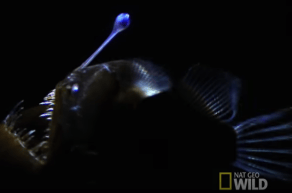
Bacteria have a nefarious reputation, yet they perform essential ecological functions; the photosynthetic variety provide life-sustaining oxygen, and the decomposers prevent ubiquitous piles of dead organisms rotting in the street. On a more interpersonal level, the flora/fauna-fest that resides in our intestines help us with digestion, and many other organisms benefit from bacteria as well, such as the angler fish shown in the video here.  The clip tells the story of two interesting co-dependent relationships.  One involves a beautiful bioluminescent bacteria that provides light in the deep ocean so its host can find prey.  The other co-dependent relationship, which has nothing to do with bacteria, is just a bonus.  I dare you to watch and witness one of the strangest romances I have ever seen as well as mother nature’s twisted side. 

Screenshot 2016-01-11 15.35.54 copy

There is also a dark side to bacteria, as we all have experienced.  A relative lightweight is the bacteria that feeds on debris in our mouth.  Brief note – regarding the human mouth, what a dichotomy!  We have sensitive taste buds where we can worship vices like Godiva cheesecake, yet we also have this gaping hole in our face that invites bacteria as wells as viruses, ill-intentioned protists, and worms into our bodies with open arms.  I suppose the size and complexity of the human body requires an enormous amount of energy to maintain, so it is an unavoidable reality that we need a mechanical powerhouse with teeth, jaws, and muscles, but it is a shame we have this unfortunate vulnerability as well.  Plaque is an unavoidable enemy we encounter daily, and if we are lucky that is the only bacteria we meet, because the heavy-weights like tuberculosis and syphillis can be deadly.  Even the notorious throat-infecting strep that once hid undetected in my son by displaying symptoms of stomach cramps instead of a sore throat could have been deadly if left untreated.  Pathogenic bacteria are cunning tricksters and shameless opportunists.

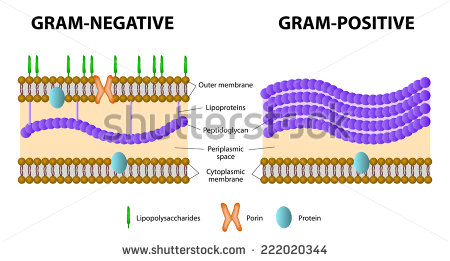
Thankfully, we have a tool to outwit these parasites.  In this case, the pen is indeed mightier than the germ because 24 hours a day, ERs are open and any doctor can easily write a prescription for an antibiotic. The accidental discovery of Penicillin in the late 1800s began an era of antibiotics, and now there are over 100 that are specifically utilized to treat different offenders.  Before treatment, however, doctors must first identify the pathogen by determining if it is “Gram negative” or “Gram positive” (see shutterstock image below).  

stock-vector-bacteria-difference-of-gram-positive-from-gram-negative-bacterial-222020344

Notice that the glaring difference between the two is in their cell wall.  Gram-negative bacteria have a thin layer of a complicated carbohydrate called peptidoglycan sandwiched between two membranes, while Gram-positive have many layers of peptidoglycan on the exterior.  Gram staining is an identification technique that takes advantage of the differential absorbance of a bio-stain due to exterior structure (see image).  Gram-negative bacteria have an outer membrane which can make them more resistant to some antibiotics.  Also, many antibiotics inhibit peptidoglycan cross linking and are more effective on gram-positive strains.    Due to the variety in bacteria and specific mechanisms of antibiotics, doctors first must investigate the perpetrator so they can treat accordingly.

Despite the advancements in healthcare and increases in life expectancy since antibiotic use became routine, our arsenal of treatment is in danger due to the growing problem of antibiotic resistance.  Some aggressive bacteria are immune to even the most powerful antibiotics.  Think about this: if a single bacterium has a mutation allowing it to evade antibiotic attacks and can reproduce every 20 minutes, it would create 32,768 identical clones in just 5 hours.  If we do not have effective tools to treat a mutated strain that has become deadly, the consequences would be catastrophic.  Experience has taught doctors to prescribe antibiotics for a course of several days.  The first few days eliminate the majority of the infection; however, there are still some lingering bugs, and these are the ones that possibly have an advantage through a favorable mutation.  Continuing antibiotics is critical to make sure that even the scrappers, the fighters who simply do not want to go down, are eradicated, because if those fighters were allowed to grow free reign, it would be much harder to destroy them should they proliferate again because they have already become resistant (not necessary completely, it takes more than one mutation to reach that level of immunity, which is again why antibiotic treatments should be taken until completion).  

The public is not educated enough of the possible consequence of not following the prescribed regimen which can allow a resistant strain to establish residence and easily spread to humans that are in close proximity.  This and the inappropriate treatment of viral infections with antibiotics can lead to widespread resistance.  Far more antibiotic use than even in the medical field is in animal and plant production.  The non-discriminate use of antibiotics in our ecosystems in order to maximize profit is a massive contributor to the problem of antibiotic resistance.


The video below is FABULOUS at discussing and illustrating bacteria and the issue of antibiotic resistance.

ted

TedEd video

There is one more important point I want to make before signing off, and that is regarding bacterial reproduction, also known as binary fission.  It is hard for me to predict what pre-knowledge students have when they walk into the classroom, but I am pretty sure they know that humans reproduce sexually.  I am also confident that they know that plants reproduce sexually via “birds and bees” that transfer pollen (sperm) from one flower to another.  I have always wanted to show this clip from my favorite childhood movie to introduce plant sexuality, but I never have just because the content gets overly obvious.  A couple of paragraphs down I include an appropriate sexual innuendo that I do discuss, but only for this reason: biology has been compared to a foreign language due to the intense amount of vocabulary that it involves.  Vocabulary retention is a huge obstacle because if students don’t remember the words, no way can they achieve understanding and mastery.   Humor and mnemonics help.

Students already know sexual reproduction and what that entails, so silly movie clips are unnecessary; however, they may not know that bacteria reproduce asexually, which begs the questions of how do they get the genetic changes that make them resistant to drugs, and how do completely different bacteria with different sequences of DNA obtain the exact same mutation to become resistant to the exact same antibiotic?

The simple answer to bacterial genetic change is that they acquire mutation due to mismatches in DNA replication, and in environmental stress they even have the ability to increase rate of mutation.  This does not explain how resistance passes between species.

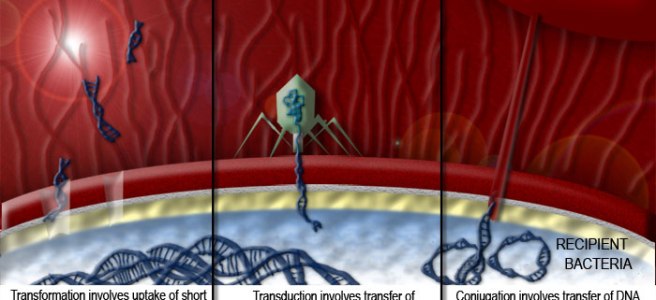
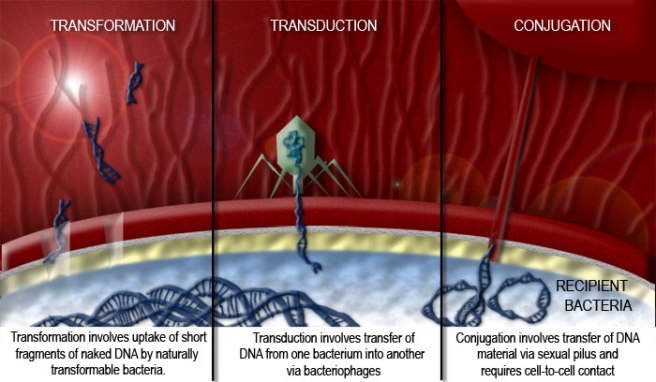
“Horizontal gene transfer” is a more complicated mechanism where bacteria obtain exogenous foreign DNA and incorporate it into their genome.  There are four types of horizontal gene transfer in bacteria, and the image below beautifully contrasts three of the four mechanisms (the image comes from a useful resource found here).

HORIZONTAL-GENE-TRANSFER-1

*The scary looking bacteriophage is simply a virus that only infects bacteria*

Note that conjugation is about as close as you get to bacteria sex , as it involves the direct transfer of bacterial DNA from one to another through an extension called a sex pilus.  This sexual innuendo I do not pass up simply because it enhances content retention. I familiarly dub “conjugation” as a “conjugal visit” and flat out point out the obvious analogy between the pilus and the penis.  I mean come on, they start with the same letter, have the same number of letters, and kind of sound like each other.  

A final method of genetic change in bacteria that can occur both internally and via horizontal gene transfer is through transposable elements.  These “jumping genes” switch their location in the bacterial genome through “cut and paste” mechanisms.  Specific DNA sequences act as tags for cutting, and enzymes including transposase switches the DNA around.

Interestingly, horizontal gene transfer can occur between species in completely different kingdoms, and the next post will focus on the eukaryotic genome (that of Animals, Plants, Fungi, and Protists) starting with their versions of transposable elements.