RIP Paul Allen

Today, I want to pay tribute to Paul Allen, The Allen Brain Institute Titan.

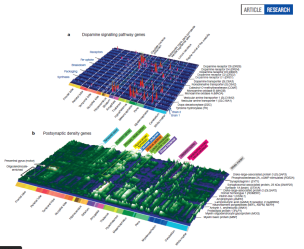
Paul’s vision and insight hit me after I read a paper published by the Allen Institute in 2012 (An anatomically comprehensive atlas of the adult human brain transcriptome). I read so many papers in a day, then file them in a folder I can easily access later; only a few a week actually get printed so that I can fully digest them (I am old school and prefer the printed word). Taking a minute to think about the dynasty this man initiated made me realize that my career switched from worm development to Alzheimer’s Disease pretty much because I fell in love with this picture:

landscape

This expression landscape, the product of many brilliant minds, still fascinates me. Being able to visually display such complex data is the beginning of conversations that will change the face of science.

I offer my deepest condolences to all he touched, and my sincere gratitude as well. You have helped me grow tremendously as a scientist, and I am so very thankful.


My evolution: from teaching to programming

Three years ago I was a high school science teacher and curriculum writer with no programming experience. This weekend I finished developing a software that I am going to present at a computational biology conference in a few weeks. The last three years completely changed  the trajectory of my career, and now that I have finished a single author paper that has consumed a tremendous amount of brainpower, I finally have the chance to sit down and blog – something I haven’t done since I started school.

Looking back to my first post in December of 2015, I am reflecting on the person I was then; a woman who loved teaching science but left the field in order to pursue a more technical career. From then until mid-2016, I started a business and worked from home, and my posts pretty much speak for themselves; my business started with curriculum writing but blossomed into medical blogging, writing test prep material, and science editing. I was doing all sorts of science consulting from the comfort of my own home.

I haven’t written since then because I returned to graduate school in order to gain skills that would help me in my business, which I thought was going to be easy because I already had a Master’s degree in biochemistry and molecular genetics; but molecular biology today is light years away from the molecular biology of 15 years ago.

Back then, I was attending graduate school right about the time when the human genome project ended. I worked in a breast cancer lab and did traditional lab work.

Fast-forward to 2016. I was ready to pick up where I left off and started working in a lung cancer lab. I kept hearing about the Cancer Genome Atlas (TCGA) which contains sequencing information for nearly 40 different types of cancer. Expression, genomic, and clinical data from thousands of patients can be accessed at firebrowse.org.

Once I found this goldmine of information, I devoted all of my time to analyzing TCGA data. For me it was a no brainer because patient data was far more valid then anything I could generate within a petri dish or test tube. Sure, there are many confounding variables that are hard to control when using patient data; however, the large sample sizes alleviated my reservations, so I jumped in.

Soon I expanded my data analytics from cancer to regulatory processes. While conducting research for a C. elegans (worm) lab, I was generating thousands of lines of code, and as I got more experienced, I spent enormous amounts of time writing functions to simplify my code. It was addictive – every time investment I made, I simplified some process so that something else became easier. Soon I had so many custom functions that I decided to publish an R package.

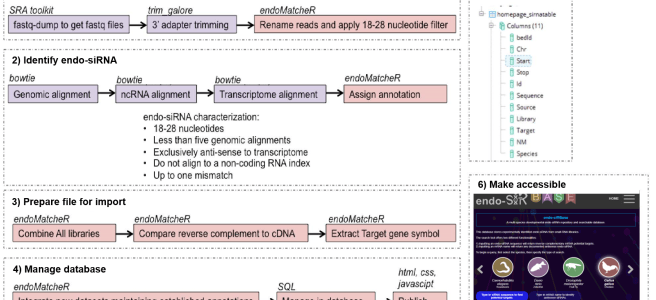
The details of my program can be found in my paper and are shown in the pipeline in the featured image, but what I am most proud of is that by initiating a collaboration with the computer science department, I was able to provide a tool that will help a lot of developmental biologists.

As this project closes, I am an author on another two papers that are being reviewed. One is on Prostate Cancer and the other is on Alzheimer’s Disease. I feel like the last two years of my life were spent gaining a variety of skills and knowledge, and the next two years are going to be spent focusing on my dissertation and applying them.

Until then…
Picture3.png


Nerd Alert

My last post was a while ago, and it is because business is simply booming.  I haven’t been able to write as much because I have been living in the library researching in order to complete projects for my clients.  When I’m not in the library I am at home, and my cats now literally sit on my lap while I type.  And yes, I am not afraid to admit that I am a nerd and a cat lady.  The good news is that I am loving every minute of it.

Due to the diversity of experience I’ve been accumulating, I’ve decided to branch out in my blogging.  I changed the focus of the blog to “Science News and Communications” because it isn’t just going to be about biology anymore, and it isn’t just going to be about teaching.  From now on, I will just write from time to time when business is slow on whatever subject my heart desires.

The past few months, I’ve learned so much as I’ve been researching and writing.  Here are a few of my favorites.

  • Astronomy: Tracing lineage is not as easy as one might think, but as far as I can tell based on names, dates, locations, and family histories, there’s a strong possibility I am distantly related to the guy who invented the radio telescope.  Even though Karl Jansky was such a big deal (he has a unit of measurement named after him), nobody knows about the guy.  So, I didn’t include him in my project.  I thought about it because writing about nebulas, black holes, and planets is really interesting, but I also wanted to make it “down-to-Earth” (pun intended).  Instead of the radio telescope, my proverbial pen veered into the history of NASA.  As I was reading, I remembered that NASA began pretty much as a flex to Russia during the cold war.  It isn’t a coincidence that Sputnik launched in 1957 and NASA opened its doors in 1958.  The coolest thing I discovered in my research was that Neil Armstrong’s words when he stepped foot on the moon in 1969 were misquoted (in 1969 they had more static I guess).  He actually said, “That’s one small step for [a] man, and one giant leap for mankind”.  The inclusion of that one letter “a” that was always left out totally changes its meaning for me.  It makes it more personal.  It links how just one action, one moment, one man, can change history.
  • Geology: In researching igneous rocks, moon phases, and earthquakes, my favorite part of the whole project was simply learning about clouds again.  One of the beauties of freelancing is that I get to walk my son home from school every day.  On a few of these walks, we played the game “name that cloud” until he got sick of it.  So then I tried to change it to “name the shape in the cumulus cloud”.  He got sick of that too.  I, for one, am not sick of it, and on my own walks and runs I still play – is that a cirrus cloud?  Cumulostratus?  Nimbus?  The only one I can get consistently is fog.
  • Surgical Procedures: Tailbone removal (coccygectomy) is actually a thing because some people have chronic pain to the point where surgery is their best option.  I’m so ambivalent about my tailbone, but indeed I remember hurting it like crazy as a kid when I landed on it wrong, so I can see why this procedure came about.  I had no idea such a procedure even existed before two weeks ago.  I’ve learned about so many medical procedures and new technology from these assignments that I had never known about.  Absolutely fascinating.
  • Quantum physics: This was the hardest project I have done so far.  I know all about electrons and their duality; they behave as particles while also behaving as light waves.  I was really confident going in because I am solid on atomic theory and structure.  However, this project went far beyond what I had expected and into the realm of Calculus.  It has been a while since I have taken an advanced math class.  Ay Caramba!  I actually had to watch MIT lectures on wave functions so that I could relearn it before writing about it.  I finished that 50 page monster today.

More to come…


Tabula Rasa

It is funny when a word or phrase that you haven’t thought of in a million years starts seeping into your consciousness over a period of a few weeks. I started thinking of the phrase “tabula rasa” when I was teaching the other day.  We were discussing stem cells in biology class and how the amazing thing about them is that they are truly blank slates. Every single cell in our body has the exact same DNA, yet in adult cells, only certain portions of DNA can actually be read. In contrast, the chromosomes of stem cells are flexible and their DNA is ready to be interpreted. As cells age, parts of their DNA become closed off and permanently unavailable due to specialization – heart cells do not need to access information on how to send or receive neurotransmitters, so that portion of their DNA is inaccessible. Heart cells cannot be converted to nerve cells because they are too “set in their ways” due to their chromosome structure, they simply do not have the ability to open the unused portions of their DNA. Stem cells, however, have no such limitations. Stem cells can be converted to neurons, heart cells, kidney cells, or any other human cells due to being open books. They are blank slates. Tabula rasa.

I have been teaching science for ten years, and now I am looking for a change. Tabula rasa.

I am getting married in three days and starting a new life with the love of my life. Tabula rasa.

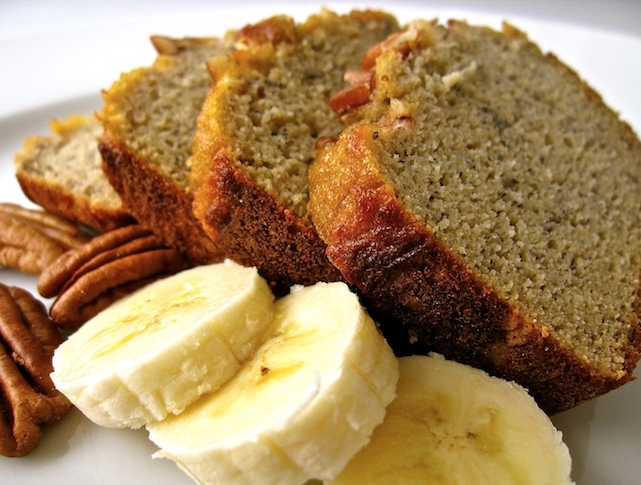
I met with an old friend tonight who just sold her business and is searching for the next chapter of her life, like me. We reminisced over wine and banana bread over how we met over 25 years ago. We talked about freshman college courses, and I thought of my psychology 101 course I took twenty years ago where I first learned of the concept of tabula rasa, the notion that babies are neither good nor bad.  Their DNA does not define them and their growth is dependent on their experiences and choices. That is when it hit me. This phrase has been lingering in my brain because every aspect of my life is screaming at me to start anew.

Whatever comes next, I know that science is my passion and my forte, and I am creating this blog to serve as a resource for educators. It will be a way of keeping me connected to a vocation I have nurtured for a decade – communicating and fostering interest in the fascinating world of biology to our youth.  Consider this blog food for thought for secondary biology teachers everywhere.  Bon appetit!

Screenshot 2016-02-22 17.23.00 copy