High school teachers have a responsibility not only to teach content but also to teach skills. One of the most critical life skills is note-taking, and it is often neglected in our curriculum because teachers are either unwilling to sacrifice class time to teach note-taking or they believe that it is not in their job description because students should already know how to take notes from middle school. Some teachers prepare fill-in-the blank worksheets believing that such an activity will help students take notes, but enabling children to rely on someone else’s organization instead of developing their own teaches students to be passive and dependent learners. This post will focus on how to teach students to retain difficult and detailed content via note-taking.
As a seasoned teacher I have witnessed that the quality of student notes directly correlates with performance, and note-taking begins and ends at home. Although homework is becoming a hot topic and there is a movement to eliminate it altogether, all of my experience shows note processing at home is critical for success.
There are four stages of note-taking:
- Pre-note homework (priming)
- Class lecture notes
- Post-note homework
- Maintenance homework
This blog will illustrate each of these stages using AP Biology’s aerobic respiration material.
Pre-notes
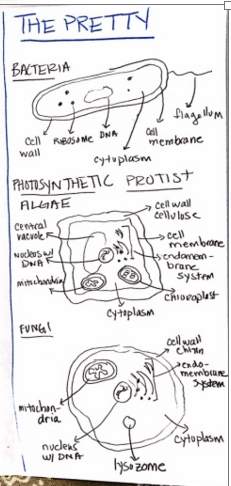
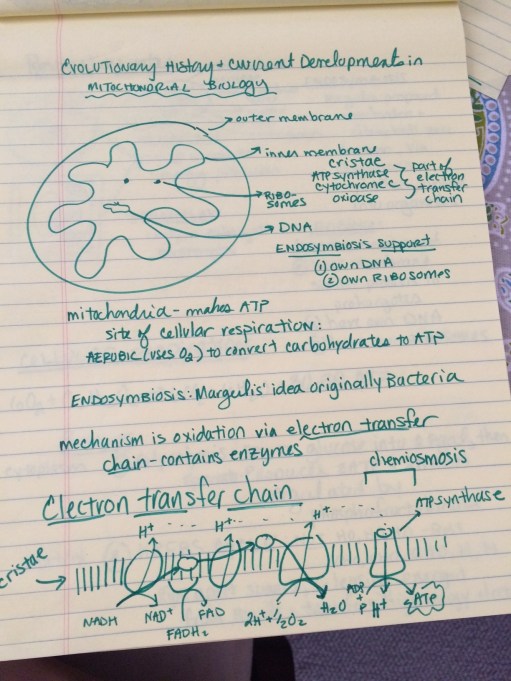
Pre-notes are critical to provide a foundation of basic knowledge on which to scaffold the details. Pearson’s Campbell Biology is an excellent resource. Pages 163-181 regarding cellular respiration are dense, long, and have an incredible amount of detail. As much as I support textbook reading, through experience I have learned that asking students to complete the reading above prior to lecture is premature. More and more students lack the ability to even process such technical information, let alone express it in their own words, and to assign 20 pages all at once before they have had any exposure to the topic typically overwhelms them. For pre-lecture notes I suggest a shorter primer like this one. I assess their notes the next day not only to keep students accountable but also to train them in efficiency. At the beginning of the year I spend a great deal of time modeling effective notes and offering extensive feedback on student attempts. So many students take pages and pages of notes that are literally sentences copied from the source. I emphasize to them that if their notes have no pictures and are copied sentences, then they have wasted their time, and they will retain very little information since they failed to reprocess the content in their own words. Here are my pre-notes on the primer above that I would model to the students to help guide them in my expectations:
Lecture Notes:
Following pre-notes are lecture notes. A lecture should be interactive, image based, and have minimal words. The more words on the screen, the more students are copying verbatim and only using one area of their brain. When students are not given the words to copy they are being forced to listen, reprocess the information into their own words, ask questions, and then record their personal understanding experience. With little to no words in presentations they will get so much more out of the discussion because they are integrating input from all over their brain. This Google Slide presentation models lecture notes and activities.
Post-Notes:
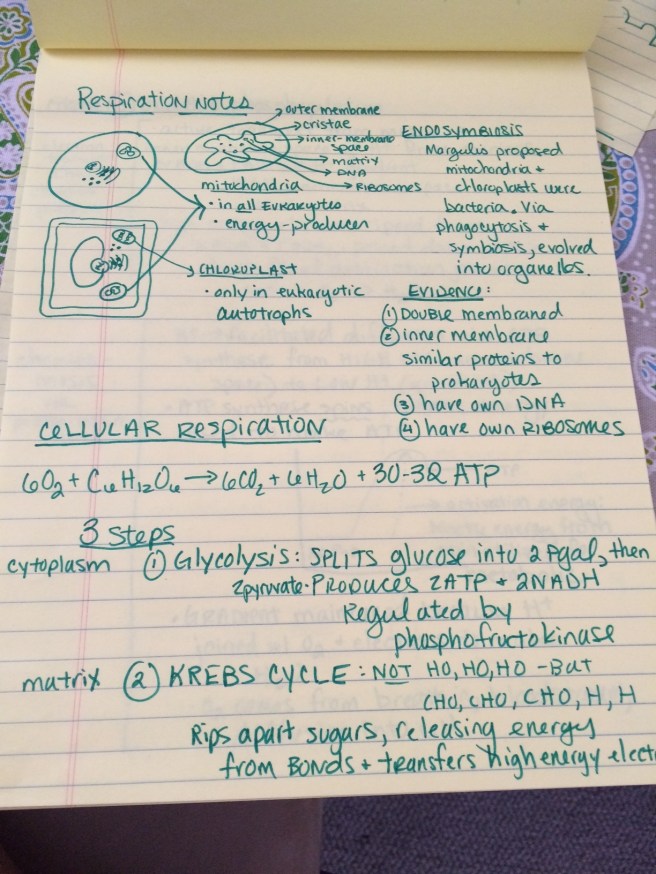
I suggest students use the lecture notes as well as the Campbell pages (Pages 163-181 will not be as overwhelming at this point due to their exposure to the material) and merge the two sources together to develop comprehensive post-notes. This time their notes should be much longer, and it is still critical that they contain images and are in their own words. They should look like something like these:
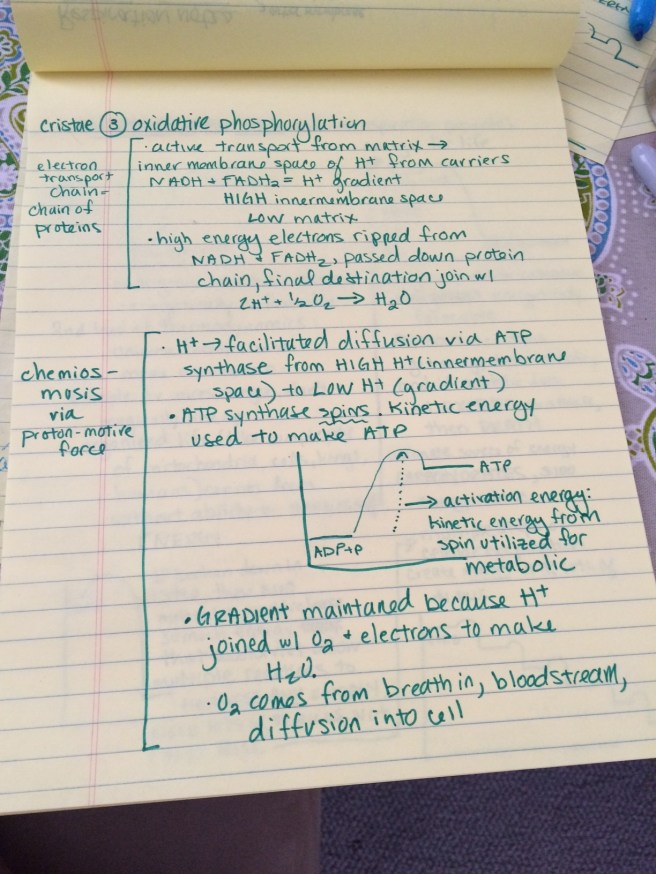
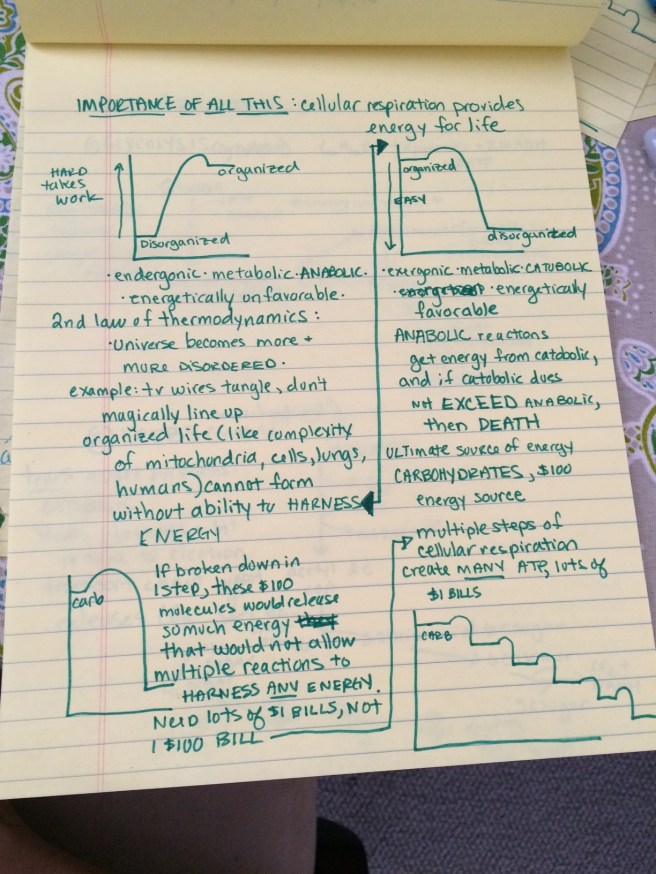
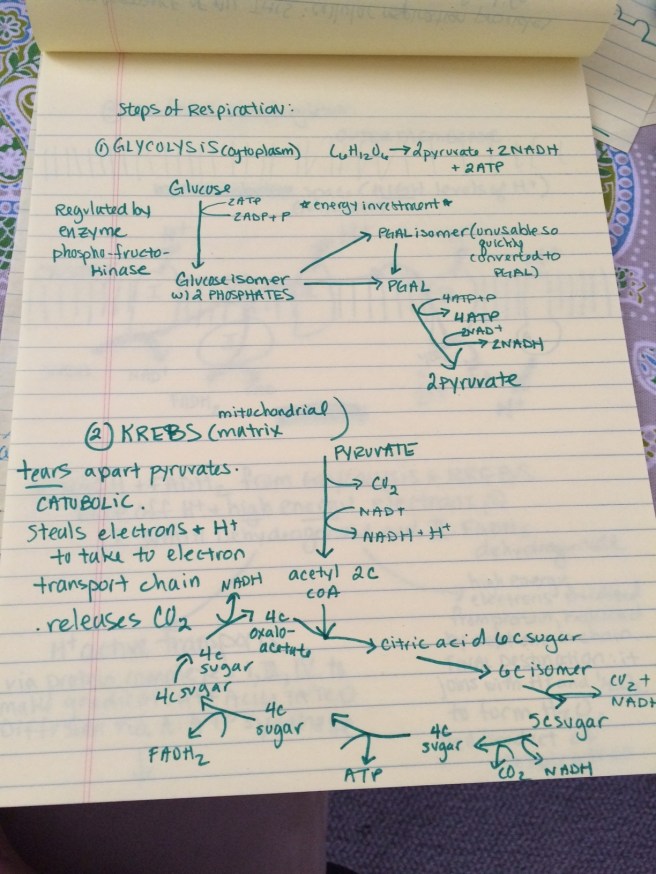
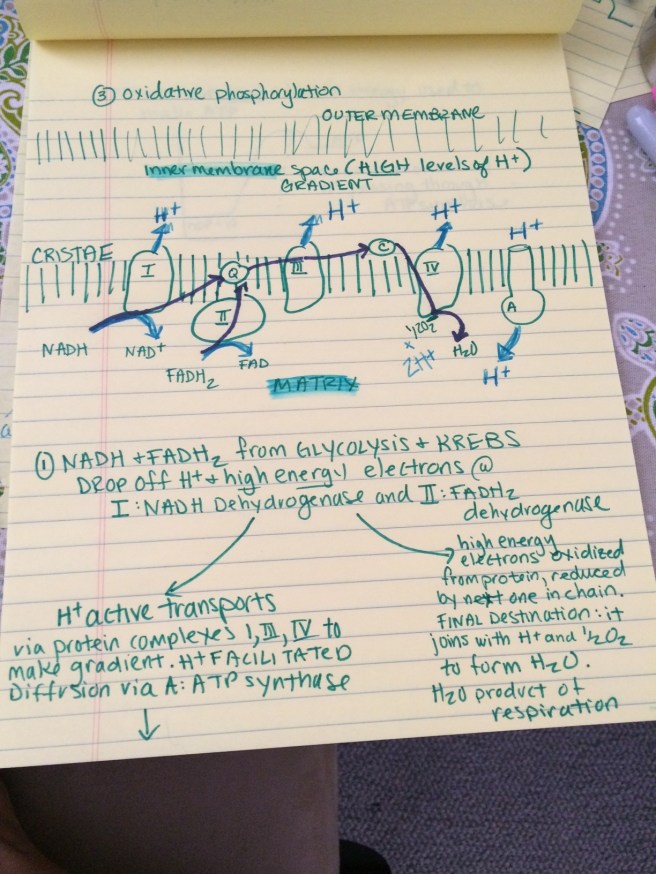
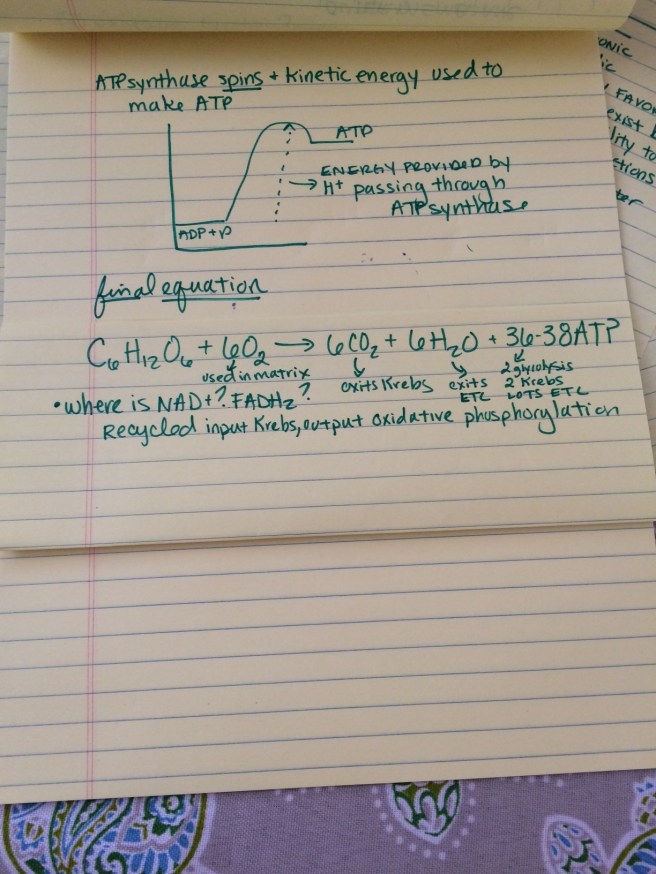
The next day in class it is important to review the material one more time in small and large group discussions before moving on to the lab, and the Google presentation linked above walks through those activities. The AP biology lab can be found here.
Maintenance:
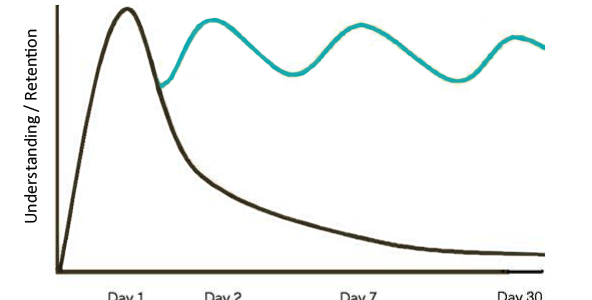
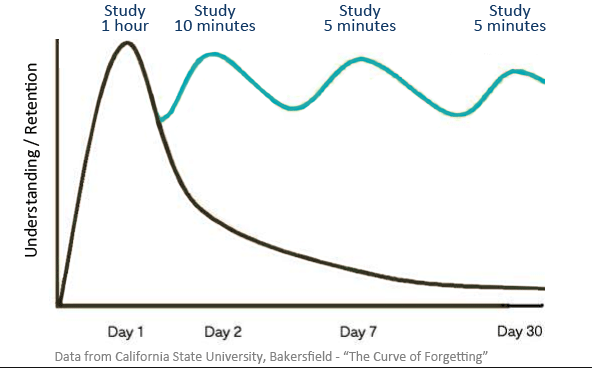
At this point students have been exposed to all the content, and they must retain it at least until the test which is usually a week or two down the road. Evidence shows that to retain information students must continue to revisit the material. (See image below. The blue line illustrates how regular small time investments result in greater long-term content retention). I emphasize to students that reviewing material is not staring at notes because most people cannot look at a piece of paper and burn the information directly into their brain. Reviewing the material should be an active process.
For active reviewing I developed something I simply call “chunk notes” which involves folding a piece of notebook paper into quadrants (chunks) and labelling each section with a unit term. One piece of paper allows for 8 concepts (front and back). Each box has to contain 5 individually constructed bullet points as well as a picture to receive credit.
After a lot of trial and error I have found this to be the most efficient way for students to review and retain material without overwhelming them. I assign chunk notes on weekends, and although they hate it (who wants homework on weekends), it is once a week so regular enough, it shouldn’t take them that long, and it is time well spent.
Note in this example of chunk notes (these are just the first 8 terms I thought of, but anything from the unit would be just as effective) that there can and will be a lot of repetition which is totally fine. The more they write something, the more likely they are to remember it.
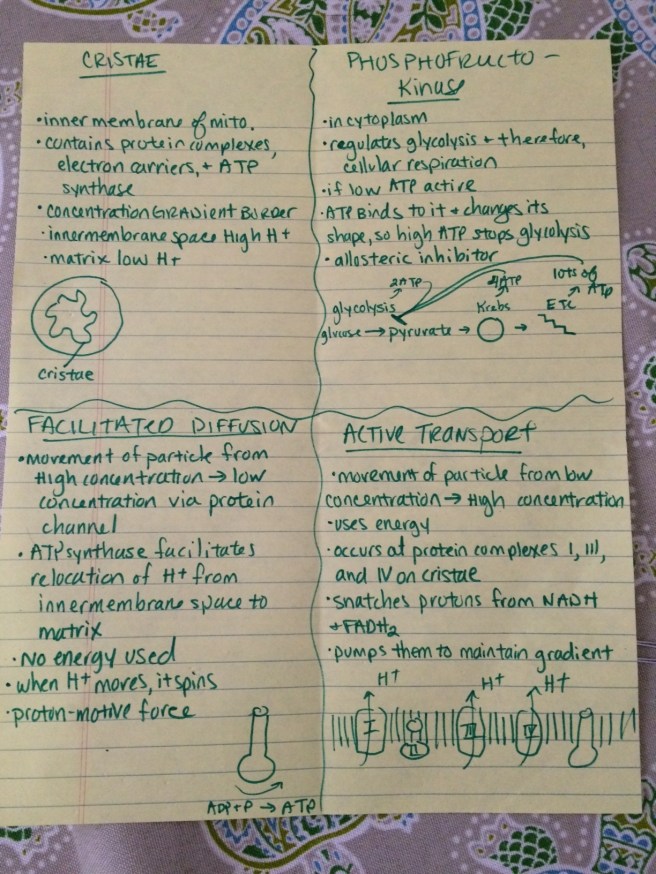
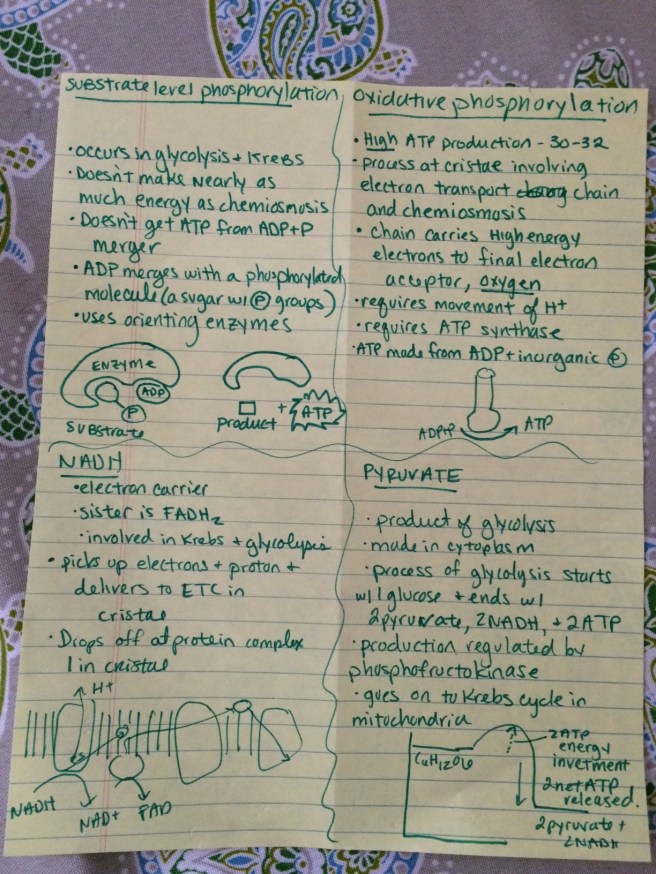
By the time the students take the test they have processed every single objective of cellular respiration in multiple ways, including reading, large group lecture and discussion, small group analysis, as well as individual practice. The last piece of this blog will be devoted to grading.
Daily Grading: Credit Card/Soft grades (mostly effort)
My grading philosophy is multi-tiered and non-traditional. First of all, my daily grades are soft grades that really only involve following directions. I do not pore over soft grade assignments with fine a tooth comb checking for accuracy (time-saver). These grades consist of glances and are recorded in a “credit card”. For example on day one, as class is getting started, I walk around and see if they have done the pre-notes. If so, they get a stamp, and if not they get an x. Simple as that.
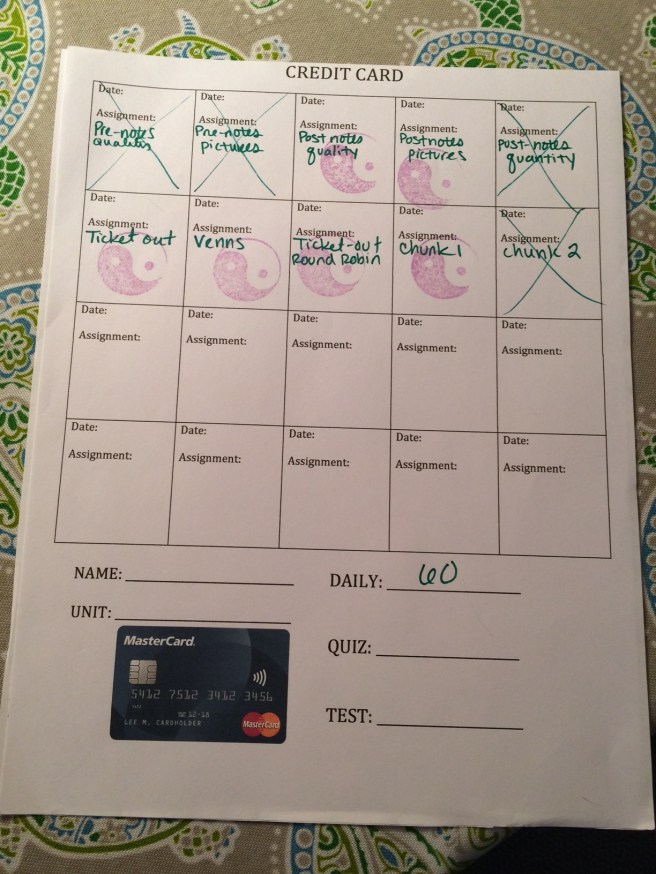
The credit card above is how I break down the respiration unit. Pre-notes are important so I assign them two boxes, one for quality, and one for pictures (as mentioned above, if biology notes are words with no images, they are not effective). Post-notes are even more important so I assign them three boxes, and for those I look for quantity and inclusiveness in addition to quality and pictures. The daily work (ticket out, Venn diagram warm-up, and round robin ticket out essay, which are all described in the Google Slide presentation) are included as incentives for students to do high quality work (it is an all or nothing check). Students need to be held accountable, and the credit card method keeps them on track. Note that not one of the activities is a worksheet. I do NOT give busy work because it is a waste of their time to do it and a waste of my time to grade it. My credit cards consist of either 10 or 20 boxes for easy grading (time-saver).
Quiz Grading: Concept Checks/Hard-grades (accuracy)
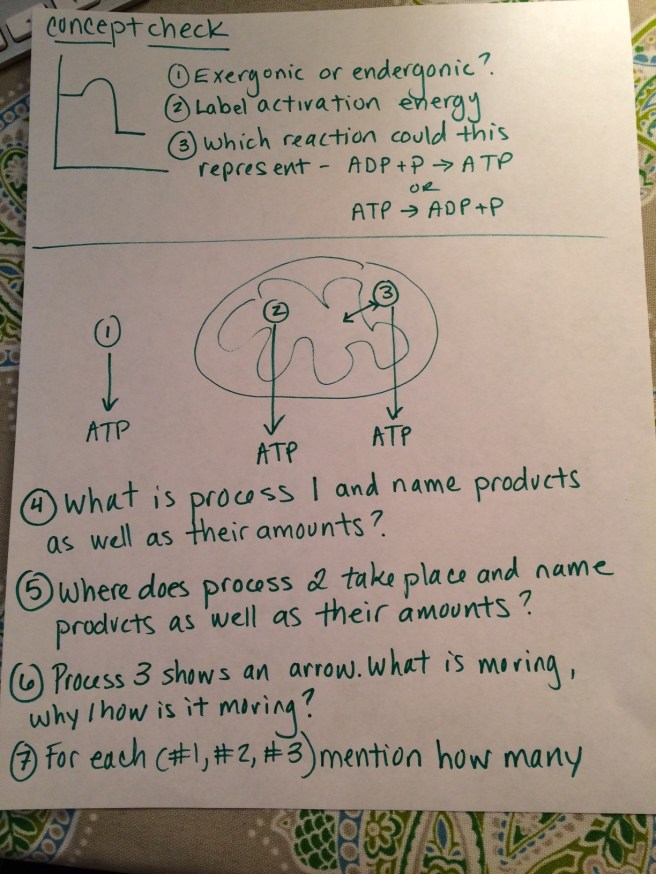
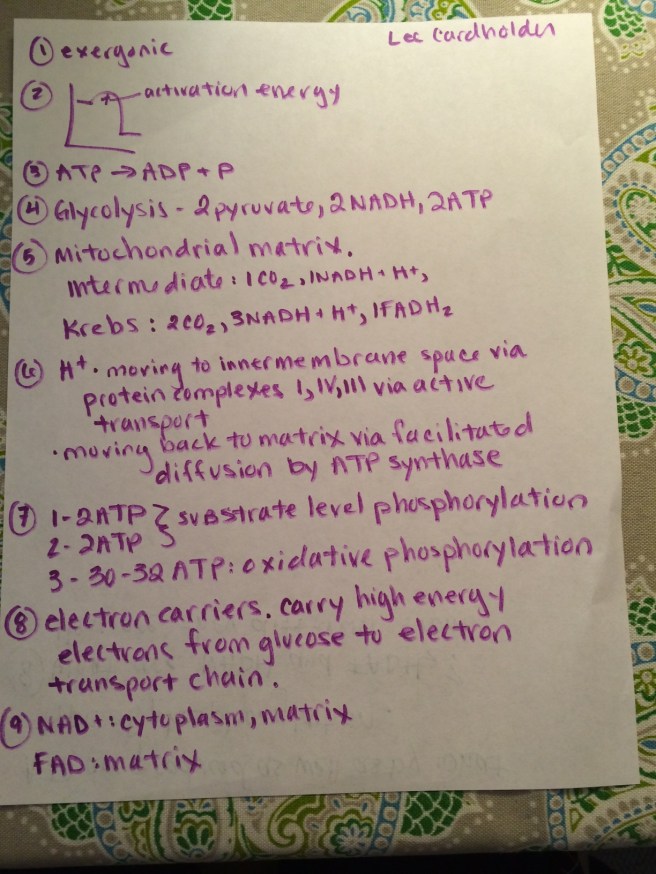
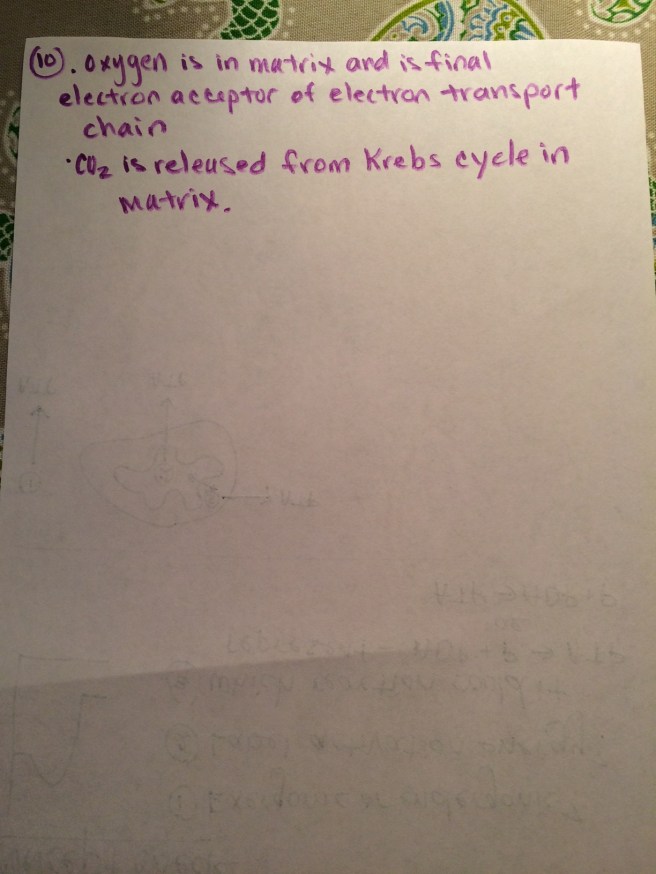
I wish I could simply take grades on effort, but that is not realistic. Students also need to be held accountable for learning, not just doing, and to do that I simply give 10 question concept checks. They are usually something I come up with the day before and are hand-written because I always include figures and do not want to spend the time generating and formatting them on the computer. Teaching is a juggling job, and my philosophy is “work smarter not harder”. Will spending an hour making a digital concept check when you can write the same one in ten minutes affect student content retention? If the answer is no, I always do the time-saver. Another time-saver is to ask students to switch papers and grade each others upon completion as I go over the answers. To prevent cheating, I always emphasize that if they bump points on their partners, I dock those points from their own grade as well as fixing their partners. Of course I look over the grading afterwards to confirm accurate grades, but I hardly ever have to adjust because in the discussion they ask for clarification if they are not sure about an answer. This peer grading serves two purposes: it gives them immediate feedback on the assignment and allows them to ask questions while also facilitating quick grading. I usually do about two per unit and their grade can either be the average or the higher of the two. See the example below:
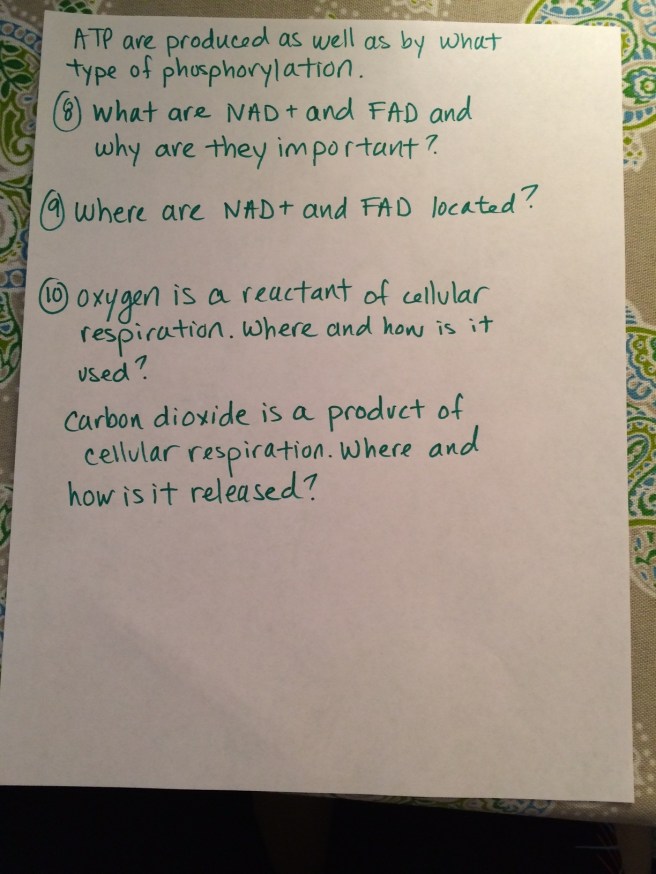
Answers:
Efficiency of soft and hard grades:
As a new teacher I spent so much time grading district worksheets that were busy work and no time grading notes. I struggled for a long time with that because worksheet grades did not correlate with student test scores at all (they are easy to copy and low-level) while the quality of class notes did. I knew that note-taking and individually processing information is the single most important skill regarding content-retention, so after a few years, I stopped grading the worksheets and I started the credit card. The credit card gave me a vehicle to grade notes, give feedback on notes, and encourage students to do meaningful work and high-level activities. Once I stopped grading busy work and started the credit card system my student test scores increased dramatically.
Hard grades are equally as important as soft grades because it would be doing students a disservice to not give them any accuracy grades prior to a test. Students need to practice taking assessments, and concept checks give them that opportunity while also being convenient to grade.
My soft and hard grading system works so well for both students and teachers. It helps them to be successful while minimizing time spent grading. In my experience students are more successful when teachers spend the time to develop meaningful lessons, create interactive PowerPoints, and give individual feedback as opposed to using their time to grade busy work.
Grading unit assessments:
Test grades consist of lab write-ups, the unit test, and/or a unit project, and I will discuss examples and my philosophy on those in the next post.