
Superbowl Sunday parties are a blast, especially when your team wins (ahem, Denver Broncos). An article here utilized as a student warm-up can be an engaging introduction to a lesson on microorganisms and disease. It has a pop culture component and links NFL “fun facts” to the flu, and it serves as a primer for complicated content. If football is not your bag there are so many other opportunities for “fun” when introducing pathogens, and finding a pop-culture “hook” is well worth the time.
Students probably don’t know about Jerry Seinfeld and his crew of characters (I am aging myself, as this was a funny sitcom in the 1990s), but even without the prior knowledge, they will certainly find these little clips funny. See clips 1, 2, and 3


Here is another humorous article that debunks a ridiculous notion that beards are disgusting bacteria-fests.

However the pathogen unit is initiated, I highly recommend starting with something relatable and funny because the content is going to get downright “hairy” and far surpass student background knowledge.
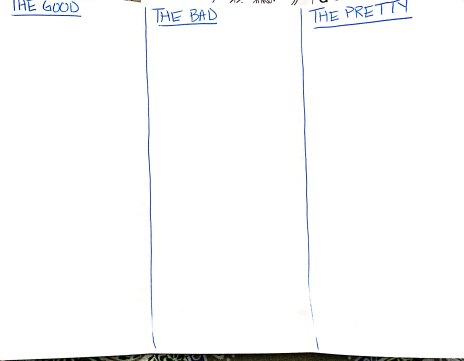
Following the quick introduction, content delivery comes next, and I direct students to complete a detailed foldable called “The Good, The Bad, and The Pretty”, meaning they have to identify beneficial microorganisms, detrimental microorganisms, and draw pretty and labeled pictures of them. Their job is to read and extrapolate information from their textbooks, and yes, I still have students read from the textbook. It is a critical life skill to read detailed information and not only to differentiate critical content from noise, but also to process the information by constructing unique explanations that aren’t verbatim duplicates of the source. Many teachers veer away from the textbook because “students can’t or won’t do it”, but to deprive students of this skill is doing them a disservice. Reading comprehension should not be the primary method of content delivery by any means, but it certainly should be weaved into the curriculum at conducive opportunities for student practice of this critical skill.
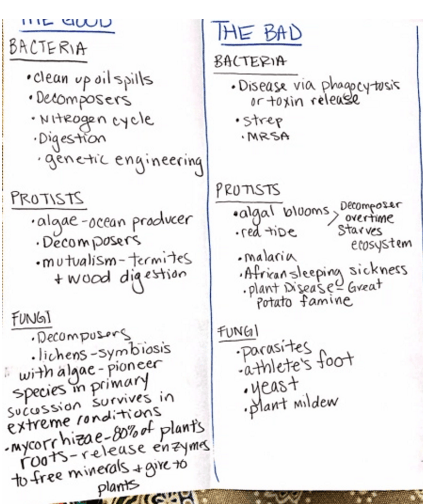
The foldable activity involves reading from the textbook, recording details in a graphic organizer-like chart, and designing comprehensive figures. I give instructions that each panel needs to discuss Bacteria, Protists, and Fungi (viruses are not technically organisms so I don’t introduce them yet) in at least three bullet points that have 4 words or less. I do not accept sentences or phrases copied from the book. I tell students if they cannot break the point down into four words or less, then they need to process further until they can. To differentiate for higher level students, I have modified their instructions so that every bullet point must have exactly four words, and that keeps them from finishing in 2 minutes while simultaneously reinforcing the material by requiring longer processing times.
I also require students to draw a cell of each kingdom and label at least 6 structures in each figure. I chunk this activity and have them work independently for 15ish minutes. It is critical that at the beginning of this activity they use their own skill-sets and work independently. After about 15ish minutes, I allow them to walk around the room to ask their peers questions and to look at other’s work for examples. This is critical for modeling and differentiating because unfortunately there are students at the high school level that simply lack reading and extrapolating skills. The opportunity for the weaker students to see models of high-quality work and for the stronger students to process content verbally, thereby reinforcing it, benefits both populations. After the five minute break, students have 5-10 more minutes to incorporate information and complete their foldables, then lecture begins. From start to finish, their work should look like this (except they should have pictures included).
Many teachers cringe at the concept of lectures because as technology is further incorporated into pedagogy (as it should be), old-school strategies are frowned upon. Lecture need not be traditional “teacher talk & student copy” though. Meaningful and highly effective presentations are deliberately designed with minimal words, image analysis, and the incorporation of appropriate processing breaks. Like textbook reading, lecture should be integrated into any teacher’s classroom, not all the time, but occasionally, in order for students to practice note taking. If students are not exposed to the art of listening to explanations and asking questions for clarification, they are missing a critical piece of education, which is to prepare them for life.
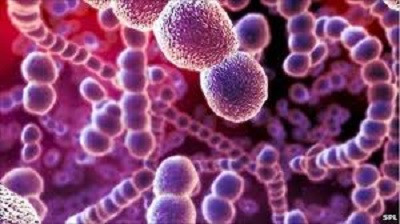
The foldable is my diving-board into the lecture, and I spend a lot of time making it engaging, like a ted-talk. I start with a picture of bacteria like this one, focus on the details I want students to remember, and integrate memorable details, in this case maybe discussing a friend of mine’s mom who was in the hospital for over a month with a bacterial infection. I deliver content without spoon-feeding them the words while taking the time to make sure that every student has the opportunity to include the details in their notes in case they missed them.
After bacteria, delivery of information on protists then fungus is the same, again giving every student the opportunity to fill in gaps and ask questions.
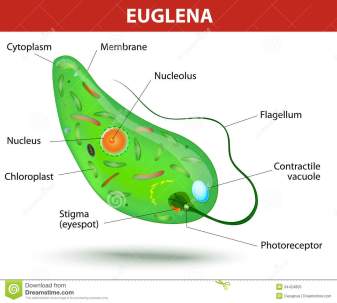
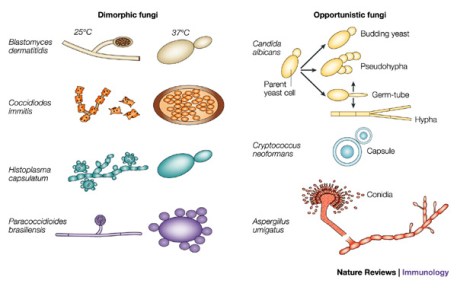
Following lecture, to wrap up the lesson, a critical piece is to raise students to the analysis level, and figure analysis is one of the most effective closure activities in biology. Sometimes I deliberately “mess-up”, and then use it to my advantage. For example, at the end of this particular lecture I could post these foldable images and ask students to identify two important points regarding each cell type, any goofs, and two possible interesting additions that could be added to each picture. This analysis and extension involves small group discussion followed by an opportunity for me to stretch them for high quality answers in a large group discussion.
The students always wow me with what they notice and interpret. In this type of activity, after hearing all of their answers, I reveal my thoughts as well, providing a nice wrap-up.
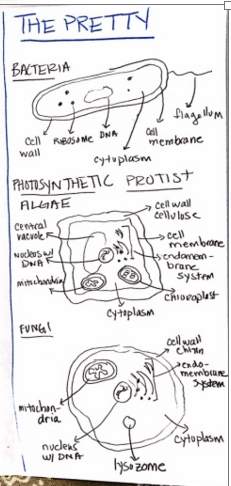
- BACTERIA:
- Important: no nucleus, prokaryotic like Archae, super small
- Goof: Bacteria have very large circular central chromosomes in the nucleoid region, the smaller circular DNA are plasmids
- Extension: Could add bacteriophage infecting it
- PROTIST
- Important: eukaryote so way larger and more complicated than bacteria, mostly single celled
- Goof: This is obviously a plant cell due to its square shape and cell wall of cellulose.
- Extension: Should have animal-like, plant-like, and fungus-like all in picture
- FUNGUS
- Important: heterotroph and should never have a chloroplast
- Goof: over-simplified cell missing some structures
- Extension: Could draw multi-cellular mushroom with hyphae and mycelia
This post discussed the importance of note-taking and lecture style. The next one will include more details on student notes as well as a lecture an example via Google Slides.

