
DNA is the recipe for life but it is just letters, it doesn’t do anything on its own other than sit in the nucleus of our cells; it is protein, what DNA is translated into, that directly determines our characteristics. Enzymes, a type of protein, are critical for every single chemical reaction in our body, and life is simply unable to create the complexity that it does without their significant biological help. The universe is driven by the principle of increasing entropy and randomness. I always illustrate this concept to my students by mentioning necklaces or TV wires. No matter how well arranged they are, left alone for a while, they will turn into a tangled mess, and they do it every time. The principle of entropy is the second law of thermodynamics, and it is simply that the universe moves towards disorder. There is no way getting around annoying interlacing TV wires unless you straight-jacket them. If this is true, if mayhem is a law of physics, how can we have eyeballs, an architectural miracle, a highly organized structure that cannot even be artificially created due to its complexity? ENZYMES. These enzymes facilitate reactions and allow us to utilize the energy in the food we consume to build our machinery. Without enzymes, without these proteins, life as we know it would not exist.
This DNA/Protein relationship is critical to life on so many levels. We need DNA for instructions, and we need protein to override the second law of thermodynamics. The process of making protein from DNA is recognized in biology as the central dogma because of its importance.
What has bothered me for years is that the role of RNA in this whole dogma is underrepresented. It does not have the reputation of its step-sisters DNA and protein, and it is the one who does all the work with none of the glory. RNA copies the DNA code and translates it into protein. There are three types of RNA involved in protein synthesis:
- messenger RNA – mRNA
- ribosomal RNA – rRNA
- transfer RNA – tRNA
I discussed protein synthesis and shared an activity in The Human Genome post prior to this one that highlights the roles of these three RNA molecules. As a closure to that topic, I wanted to share an amazing Nature Video found here.
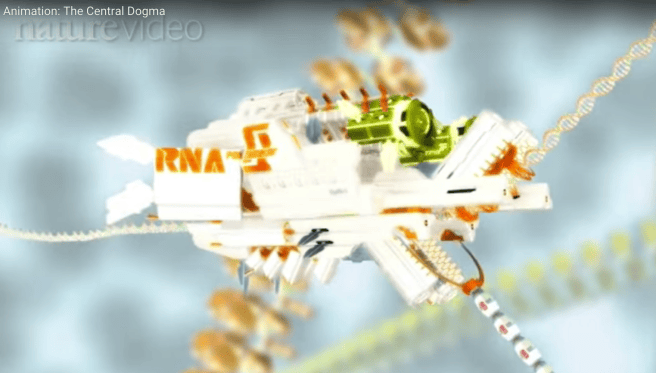
This video is breathtaking because it displays the complexity of protein synthesis in a spectacular format, likening essential proteins to complex aircrafts. It shows that transcription, or copying DNA into mRNA, is a highly regulated process and that translation, or building the actual protein, is like an assembly line. There is also small nuclear RNA (snRNA) that is involved in this process, although it isn’t shown. snRNA creates a spliceosome which snips out parts of the message before it is made into protein.
RNA, specifically mRNA, tRNA, rRNA, and snRNA, should be commended for their essential role in protein synthesis. The following types of RNA should also be commended because they are adorable, interesting, and have a more indirect role in protein synthesis by regulating gene expression.
- micro RNA (miRNA)
- small interfering RNA (siRNA)
- piwi-associated RNA (piRNA)
These three types of RNA encoded by our genome are tiny, less than 30 nucleotides. Both miRNA and siRNA actually bind to complementary sequences and block expression of certain genes and are actually regulatory in nature. RNA interference is a direct result of miRNA and siRNA expression (see the website and video here for a great explanation). RNAi is a technique commonly used in biotechnology to suppress expression of genes to ascertain their function. siRNA and piRNA are associated with closing chromatin, blocking expression of certain genes by making them inaccessible with the protein machinery required for copying.
Protein synthesis is so complicated and involves a hierarchy of events. Today’s goal was simply to highlight the essential role of RNA and to introduce the entire RNA family.
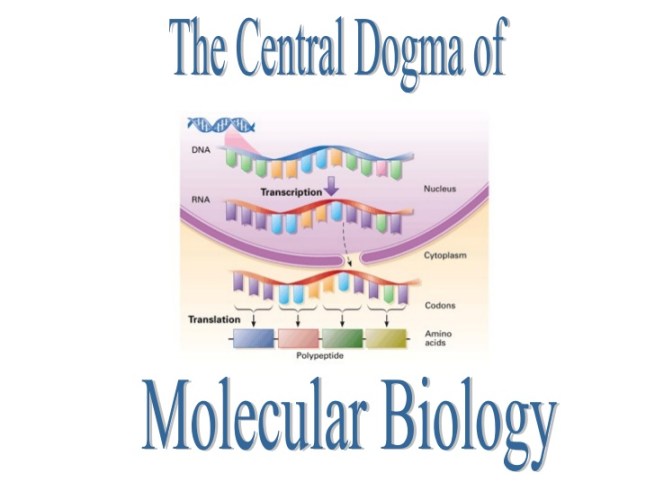
Image from this website

