Respiration, Note Taking, and Grading

High school teachers have a responsibility not only to teach content but also to teach skills.  One of the most critical life skills is note-taking, and it is often neglected in our curriculum because teachers are either unwilling to sacrifice class time to teach note-taking or they believe that it is not in their job description because students should already know how to take notes from middle school.  Some teachers prepare fill-in-the blank worksheets believing that such an activity will help students take notes, but enabling children to rely on someone else’s organization instead of developing their own teaches students to be passive and dependent learners.  This post will focus on how to teach students to retain difficult and detailed content via note-taking.

As a seasoned teacher I have witnessed that the quality of student notes directly correlates with performance, and note-taking begins and ends at home.  Although homework is becoming a hot topic and there is a movement to eliminate it altogether, all of my experience shows note processing at home is critical for success.

There are four stages of note-taking:

  1.  Pre-note homework (priming)
  2. Class lecture notes
  3. Post-note homework
  4. Maintenance homework

This blog will illustrate each of these stages using AP Biology’s aerobic respiration material.

Pre-notes

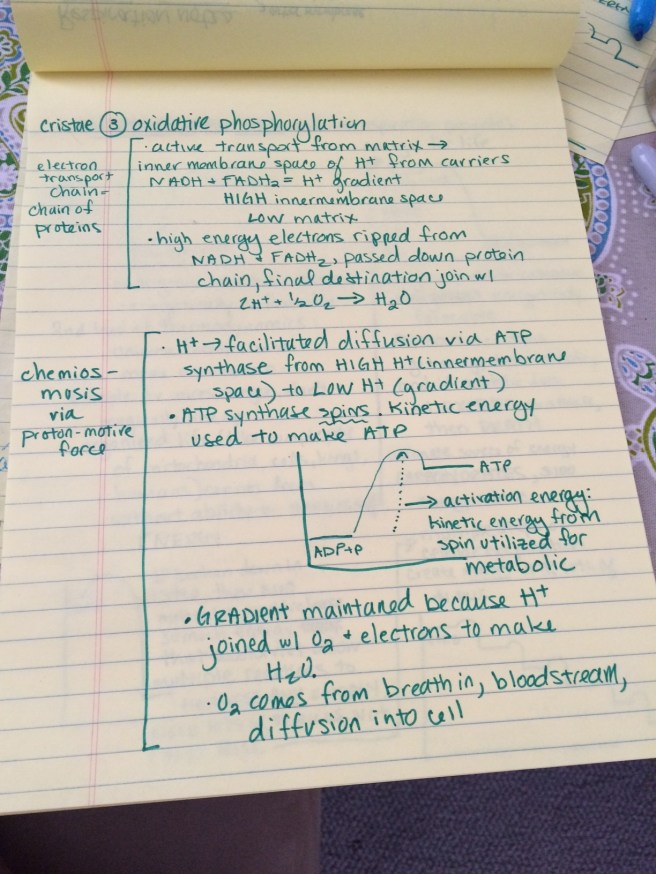
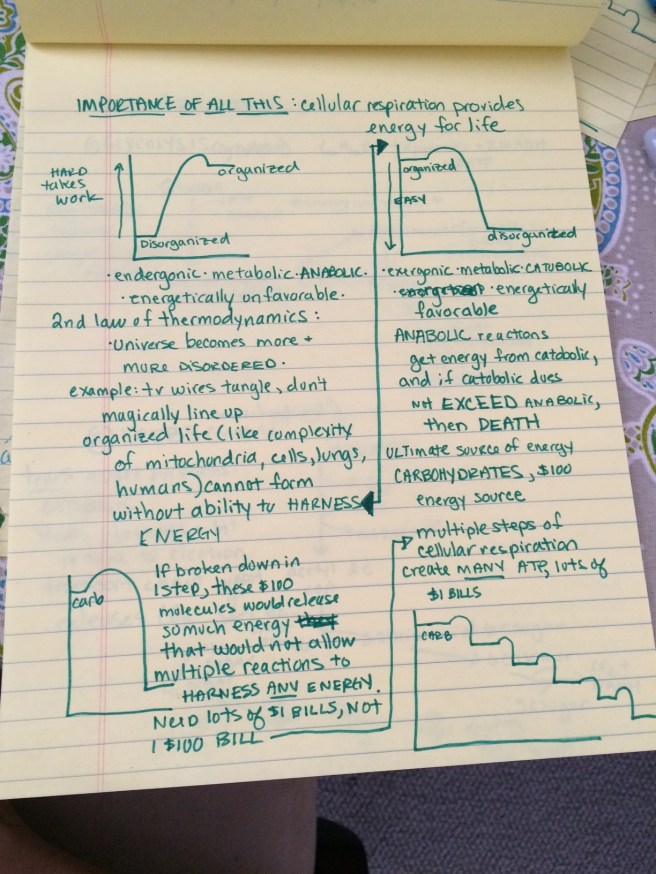
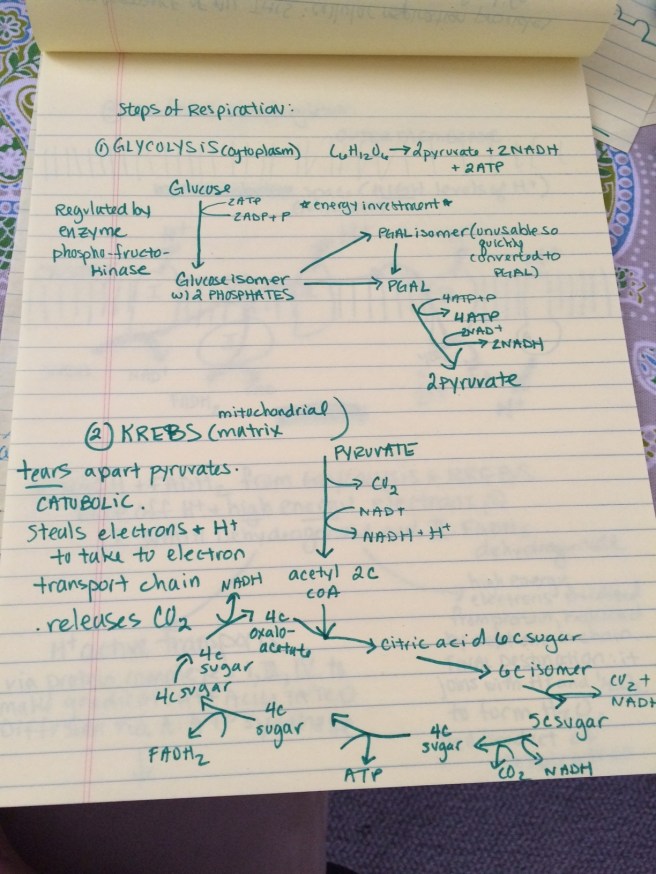
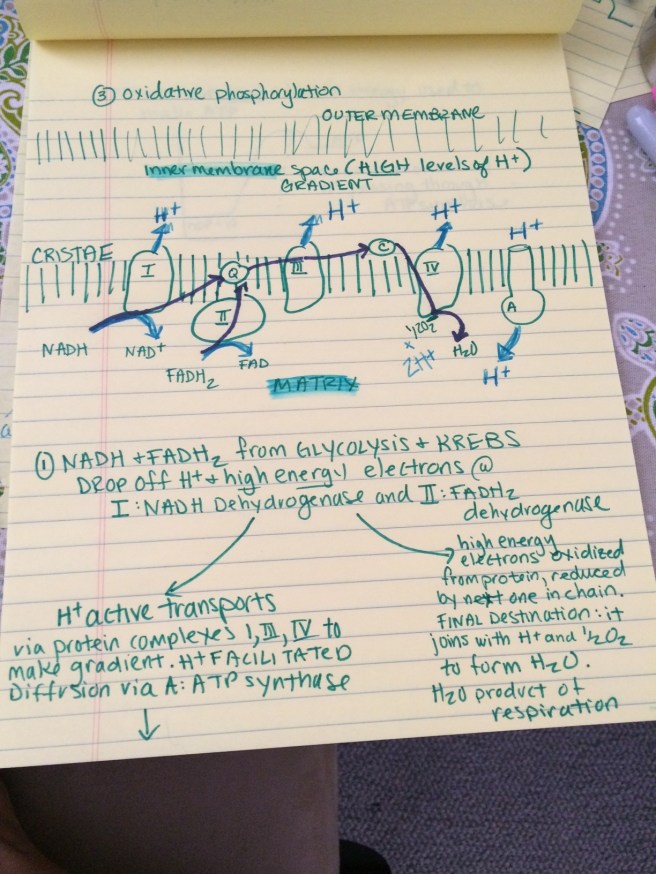
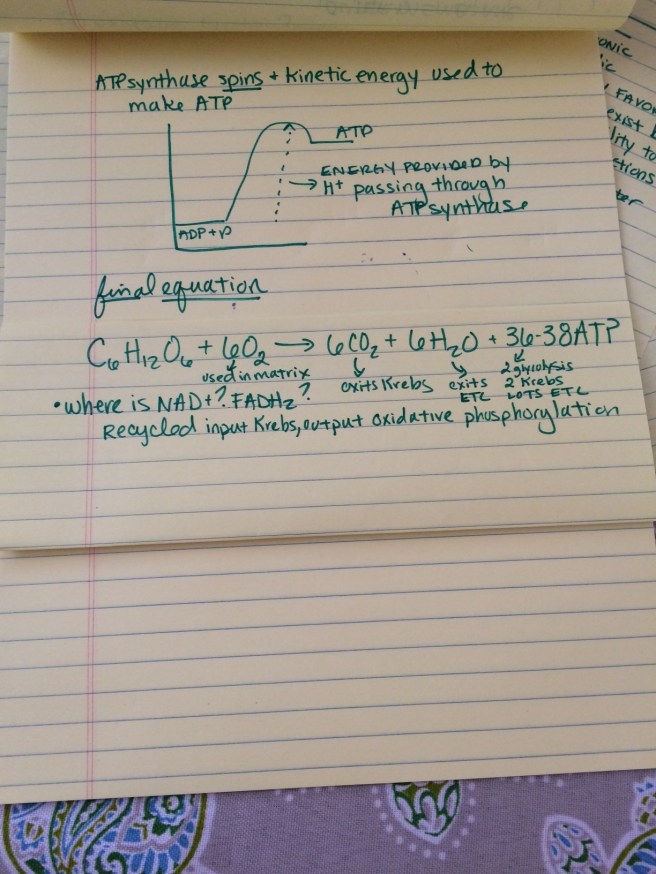
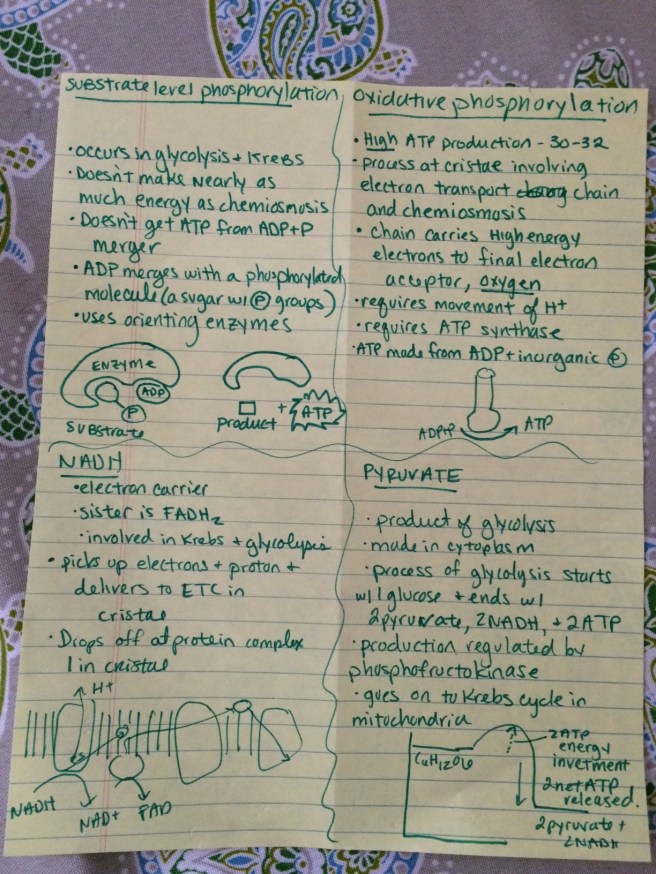
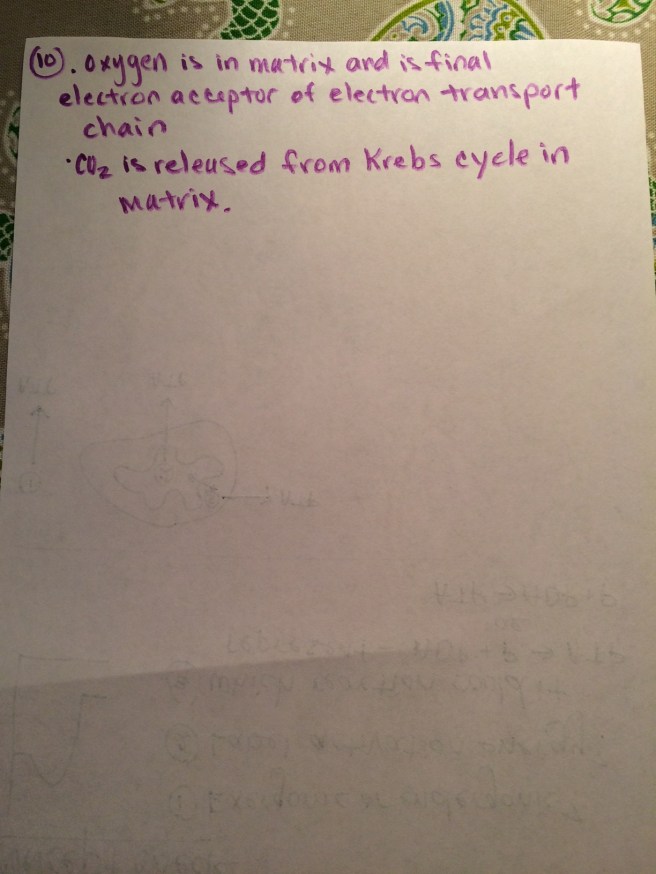
Pre-notes are critical to provide a foundation of basic knowledge on which to scaffold the details.  Pearson’s Campbell Biology is an excellent resource.  Pages 163-181 regarding cellular respiration are dense, long, and have an incredible amount of detail.  As much as I support textbook reading, through experience I have learned that asking students to complete the reading above prior to lecture is premature.  More and more students lack the ability to even process such technical information, let alone express it in their own words, and to assign 20 pages all at once before they have had any exposure to the topic typically overwhelms them.  For pre-lecture notes I suggest a shorter primer like this one.  I assess their notes the next day not only to keep students accountable but also to train them in efficiency.  At the beginning of the year I spend a great deal of time modeling effective notes and offering extensive feedback on student attempts.  So many students take pages and pages of notes that are literally sentences copied from the source.  I emphasize to them that if their notes have no pictures and are copied sentences, then they have wasted their time, and they will retain very little information since they failed to reprocess the content in their own words.  Here are my pre-notes on the primer above that I would model to the students to help guide them in my expectations:
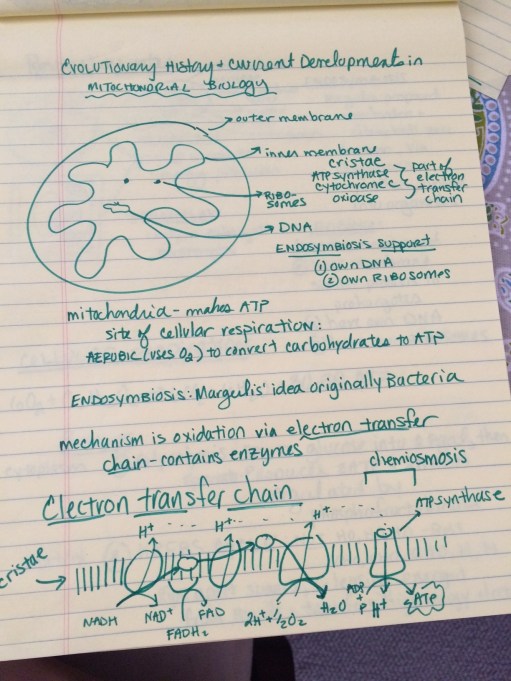
1

Lecture Notes:

Following pre-notes are lecture notes.  A lecture should be interactive, image based, and have minimal words.  The more words on the screen, the more students are copying verbatim and only using one area of their brain.  When students are not given the words to copy they are being forced to listen, reprocess the information into their own words, ask questions, and then record their personal understanding experience.  With little to no words in presentations they will get so much more out of the discussion because they are integrating input from all over their brain.  This Google Slide presentation models lecture notes and activities.

Post-Notes:

I suggest students use the lecture notes as well as the Campbell pages (Pages 163-181 will not be as overwhelming at this point due to their exposure to the material) and merge the two sources together to develop comprehensive post-notes.  This time their notes should be much longer, and it is still critical that they contain images and are in their own words.  They should look like something like these:
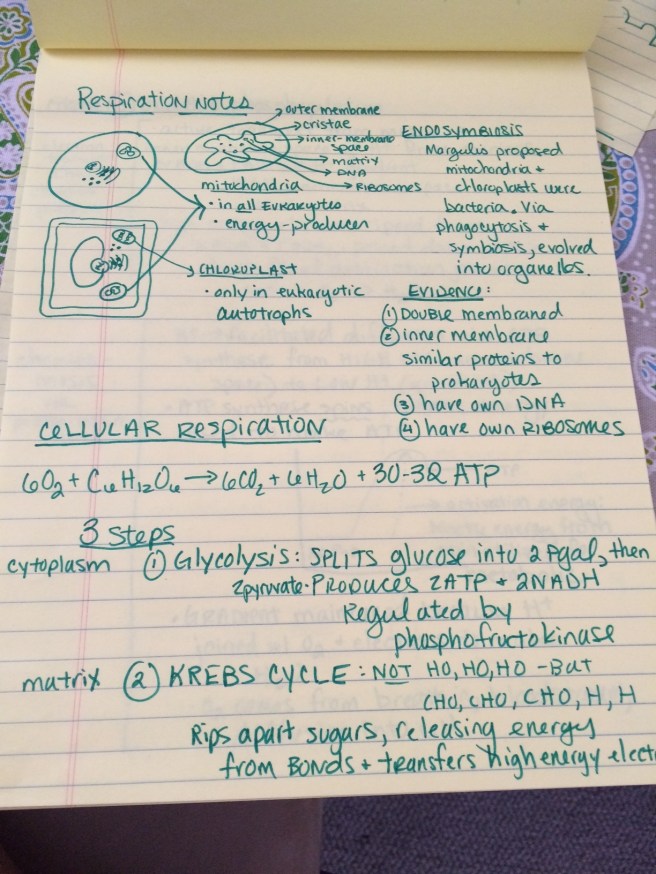
23456last


The next day in class it is important to review the material one more time in small and large group discussions before moving on to the lab, and the Google presentation linked above walks through those activities.   The AP biology lab can be found here.

Maintenance:

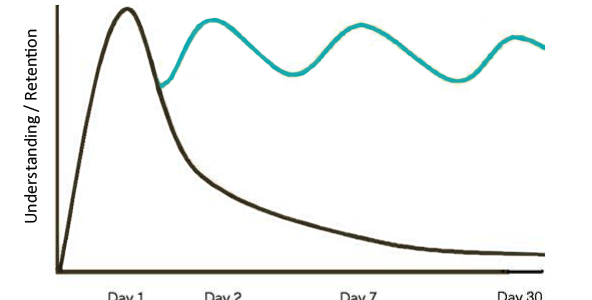
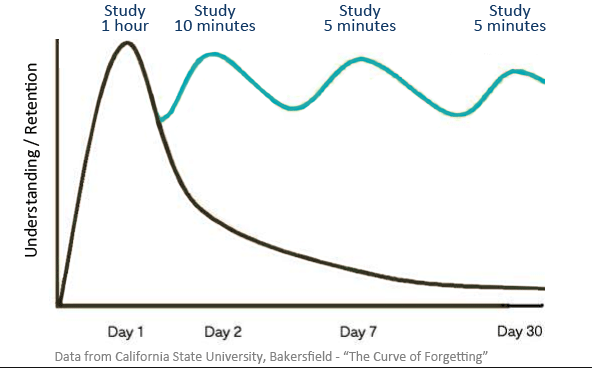
At this point students have been exposed to all the content, and they must retain it at least until the test which is usually a week or two down the road.  Evidence shows that to retain information students must continue to revisit the material.  (See image below.  The blue line illustrates how regular small time investments result in greater long-term content retention).  I emphasize to students that reviewing material is not staring at notes because most people cannot look at a piece of paper and burn the information directly into their brain.  Reviewing the material should be an active process.
Screenshot 2016-02-20 18.45.51 copy

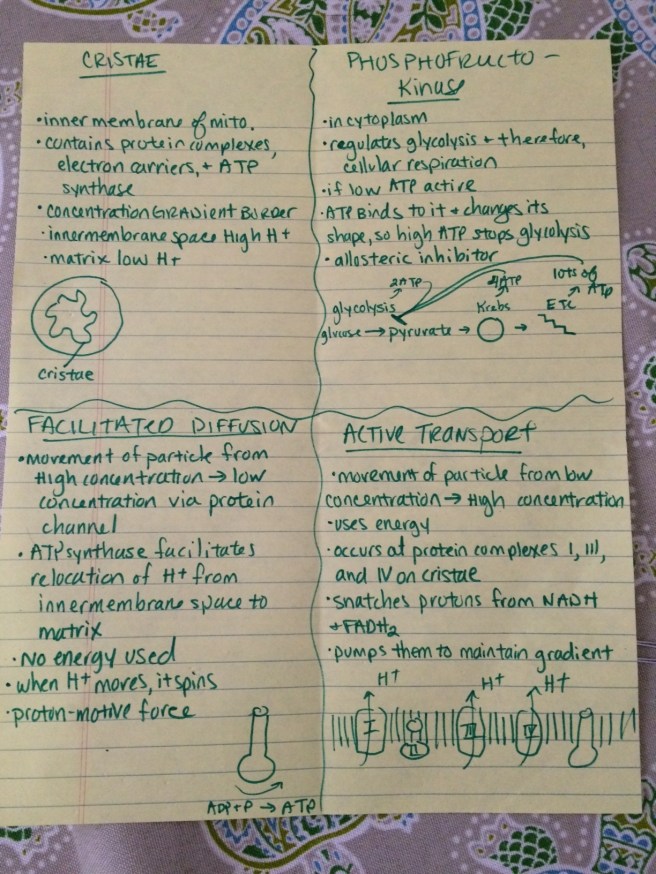
For active reviewing I developed something I simply call “chunk notes” which involves folding a piece of notebook paper into quadrants (chunks) and labelling each section with a unit term.  One piece of paper allows for 8 concepts (front and back). Each box has to contain 5 individually constructed bullet points as well as a picture to receive credit.

After a lot of trial and error I have found this to be the most efficient way for students to review and retain material without overwhelming them.  I assign chunk notes on weekends, and although they hate it (who wants homework on weekends), it is once a week so regular enough, it shouldn’t take them that long, and it is time well spent.

Note in this example of chunk notes (these are just the first 8 terms I thought of, but anything from the unit would be just as effective) that there can and will be a lot of repetition which is totally fine.  The more they write something, the more likely they are to remember it.
xy

By the time the students take the test they have processed every single objective of cellular respiration in multiple ways, including reading, large group lecture and discussion, small group analysis, as well as individual practice.  The last piece of this blog will be devoted to grading.

Daily Grading: Credit Card/Soft grades (mostly effort)

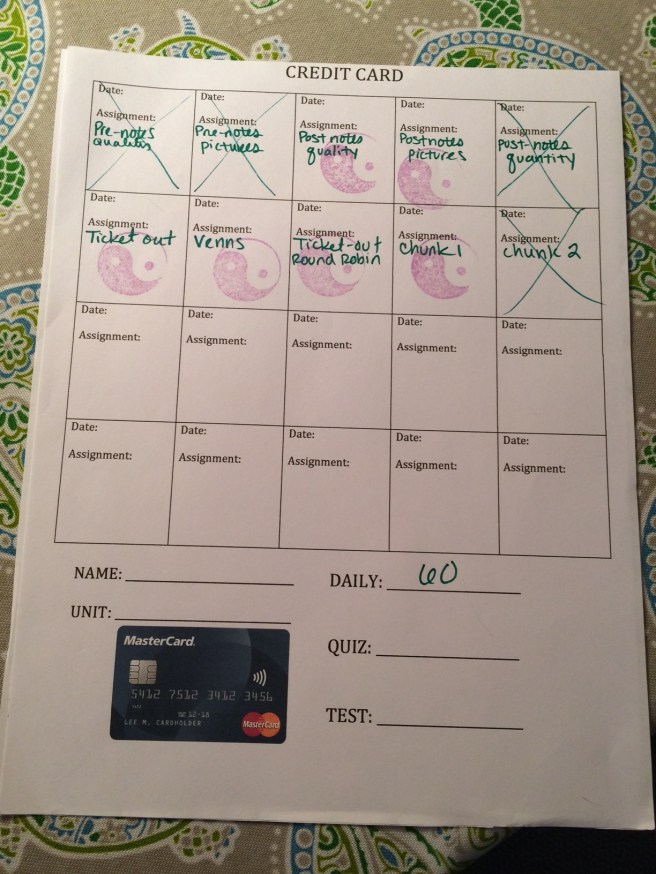
My grading philosophy is multi-tiered and non-traditional.  First of all, my daily grades are soft grades that really only involve following directions.  I do not pore over soft grade assignments with fine a tooth comb checking for accuracy (time-saver).  These grades consist of glances and are recorded in a “credit card”.  For example on day one, as class is getting started, I walk around and see if they have done the pre-notes.  If so, they get a stamp, and if not they get an x.  Simple as that.
IMG_3693 copy

The credit card above is how I break down the respiration unit.  Pre-notes are important so I assign them two boxes, one for quality, and one for pictures (as mentioned above, if biology notes are words with no images, they are not effective).  Post-notes are even more important so I assign them three boxes, and for those I look for quantity and inclusiveness in addition to quality and pictures.  The daily work (ticket out, Venn diagram warm-up, and round robin ticket out essay, which are all described in the Google Slide presentation) are included as incentives for students to do high quality work (it is an all or nothing check).  Students need to be held accountable, and the credit card method keeps them on track.  Note that not one of the activities is a worksheet.  I do NOT give busy work because it is a waste of their time to do it and a waste of my time to grade it.  My credit cards consist of either 10 or 20 boxes for easy grading (time-saver).

Quiz Grading: Concept Checks/Hard-grades (accuracy)

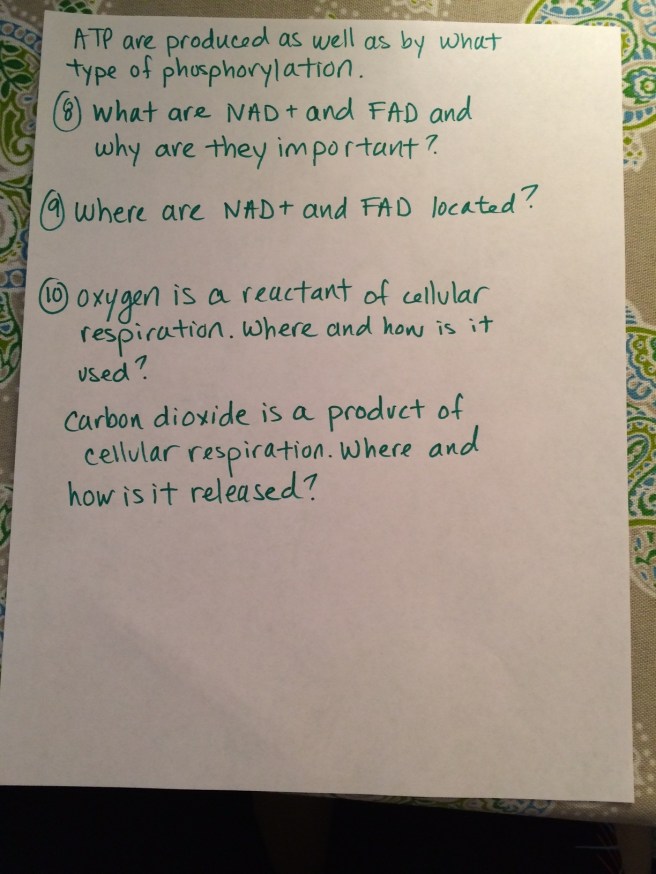
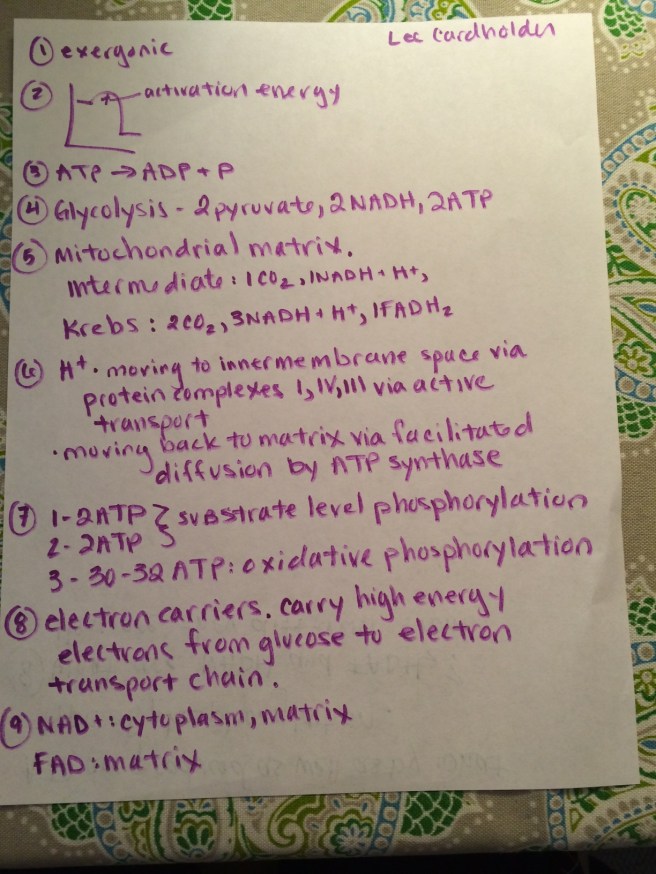
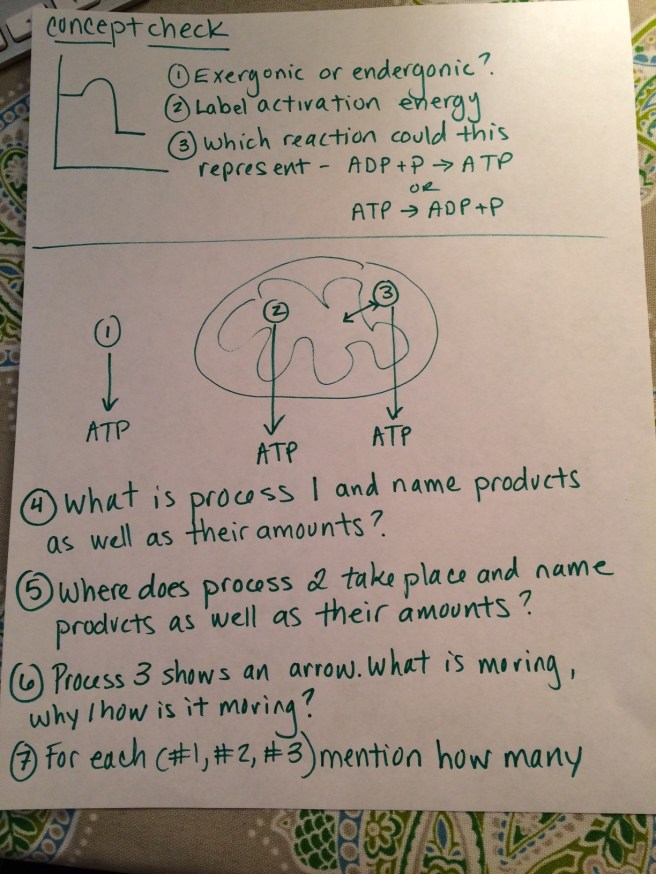
I wish I could simply take grades on effort, but that is not realistic.  Students also need to be held accountable for learning, not just doing, and to do that I simply give 10 question concept checks.  They are usually something I come up with the day before and are hand-written because I always include figures and do not want to spend the time generating and formatting them on the computer.  Teaching is a juggling job, and my philosophy is “work smarter not harder”.  Will spending an hour making a digital concept check when you can write the same one in ten minutes affect student content retention?  If the answer is no, I always do the time-saver.  Another time-saver is to ask students to switch papers and grade each others upon completion as I go over the answers.  To prevent cheating, I always emphasize that if they bump points on their partners, I dock those points from their own grade as well as fixing their partners.  Of course I look over the grading afterwards to confirm accurate grades, but I hardly ever have to adjust because in the discussion they ask for clarification if they are not sure about an answer.  This peer grading serves two purposes:  it gives them immediate feedback on the assignment and allows them to ask questions while also facilitating quick grading.  I usually do about two per unit and their grade can either be the average or the higher of the two.  See the example below:
IMG_3688 copyIMG_3689 copy

Answers:

IMG_3691 copy


IMG_3692 copy

Efficiency of soft and hard grades:

As a new teacher I spent so much time grading district worksheets that were busy work and no time grading notes.  I struggled for a long time with that because worksheet grades did not correlate with student test scores at all (they are easy to copy and low-level) while the quality of class notes did.   I knew that note-taking and individually processing information is the single most important skill regarding content-retention, so after a few years, I stopped grading the worksheets and I started the credit card.  The credit card gave me a vehicle to grade notes, give feedback on notes, and encourage students to do meaningful work and high-level activities.  Once I stopped grading busy work and started the credit card system my student test scores increased dramatically.

Hard grades are equally as important as soft grades because it would be doing students a disservice to not give them any accuracy grades prior to a test.  Students need to practice taking assessments, and concept checks give them that opportunity while also being convenient to grade.

My soft and hard grading system works so well for both students and teachers.  It helps them to be successful while minimizing time spent grading.  In my experience students are more successful when teachers spend the time to develop meaningful lessons, create interactive PowerPoints, and give individual feedback as opposed to using their time to grade busy work.

Grading unit assessments:

Test grades consist of lab write-ups, the unit test, and/or a unit project, and I will discuss examples and my philosophy on those in the next post.



Superbowl, the Double Dip, and Seinfeld

Superbowl Sunday parties are a blast, especially when your team wins (ahem, Denver Broncos).  An article here utilized as a student warm-up can be an engaging introduction to a lesson on microorganisms and disease.   It has a pop culture component and links NFL “fun facts” to the flu, and it serves as a primer for complicated content.  If football is not your bag there are so many other opportunities for “fun” when introducing pathogens, and finding a pop-culture “hook” is well worth the time.

Students probably don’t know about Jerry Seinfeld and his crew of characters (I am aging myself, as this was a funny sitcom in the 1990s), but even without the prior knowledge, they will certainly find these little clips funny.  See clips 1, 2, and 3

Here is another humorous article that debunks a ridiculous notion that beards are disgusting bacteria-fests.

150505_SCI_BeardRed.jpg.CROP.promo-mediumlarge

However the pathogen unit is initiated, I highly recommend starting with something relatable and funny because the content is going to get downright “hairy” and far surpass student background knowledge.

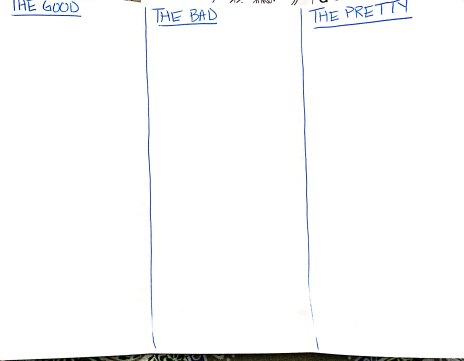
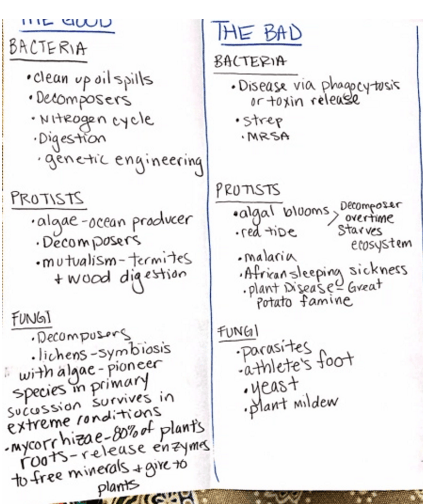
Following the quick introduction, content delivery comes next, and I direct students to complete a detailed foldable called “The Good, The Bad, and The Pretty”, meaning they have to identify beneficial microorganisms, detrimental microorganisms, and draw pretty and labeled pictures of them.  Their job is to read and extrapolate information from their textbooks, and yes, I still have students read from the textbook.  It is a critical life skill to read detailed information and not only to differentiate critical content from noise, but also to process the information by constructing unique explanations that aren’t verbatim duplicates of the source.  Many teachers veer away from the textbook because “students can’t or won’t do it”, but to deprive students of this skill is doing them a disservice.  Reading comprehension should not be the primary method of content delivery by any means, but it certainly should be weaved into the curriculum at conducive opportunities for student practice of this critical skill.

The foldable activity involves reading from the textbook, recording details in a graphic organizer-like chart, and designing comprehensive figures.  I give instructions that each panel needs to discuss Bacteria, Protists, and Fungi (viruses are not technically organisms so I don’t introduce them yet) in at least three bullet points that have 4 words or less.  I do not accept sentences or phrases copied from the book.  I tell students if they cannot break the point down into four words or less, then they need to process further until they can.  To differentiate for higher level students, I have modified their instructions so that every bullet point must have exactly four words, and that keeps them from finishing in 2 minutes while simultaneously reinforcing the material by requiring longer processing times.

Einstein

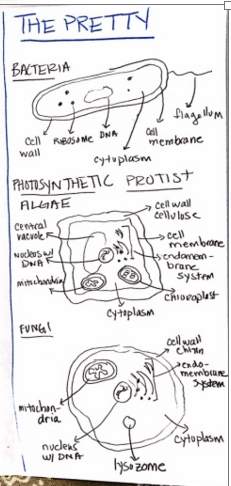
I also require students to draw a cell of each kingdom and label at least 6 structures in each figure.  I chunk this activity and have them work independently for 15ish minutes.  It is critical that at the beginning of this activity they use their own skill-sets and work independently.  After about 15ish minutes, I allow them to walk around the room to ask their peers questions and to look at other’s work for examples.  This is critical for modeling and differentiating because unfortunately there are students at the high school level that simply lack reading and extrapolating skills.  The opportunity for the weaker students to see models of high-quality work and for the stronger students to process content verbally, thereby reinforcing it, benefits both populations.  After the five minute break, students have 5-10 more minutes to incorporate information and complete their foldables, then lecture begins.  From start to finish, their work should look like this (except they should have pictures included).

1

Screenshot 2016-02-10 12.28.22 copy

Many teachers cringe at the concept of lectures because as technology is further incorporated into pedagogy (as it should be), old-school strategies are frowned upon. Lecture need not be  traditional “teacher talk & student copy” though.  Meaningful and highly effective presentations are deliberately designed with minimal words, image analysis, and the incorporation of appropriate processing breaks.  Like textbook reading, lecture should be integrated into any teacher’s classroom, not all the time, but occasionally, in order for students to practice note taking.  If students are not exposed to the art of listening to explanations and asking questions for clarification, they are missing a critical piece of education, which is to prepare them for life.

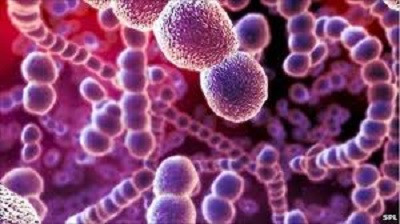
The foldable is my diving-board into the lecture, and I spend a lot of time making it engaging, like a ted-talk.  I start with a picture of bacteria like this one, focus on the details I want students to remember, and integrate memorable details, in this case maybe discussing a friend of mine’s mom who was in the hospital for over a month with a bacterial infection.  I deliver content without spoon-feeding them the words while taking the time to make sure that every student has the opportunity to include the details in their notes in case they missed them.

bacteria copy

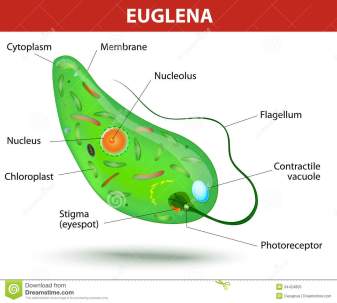
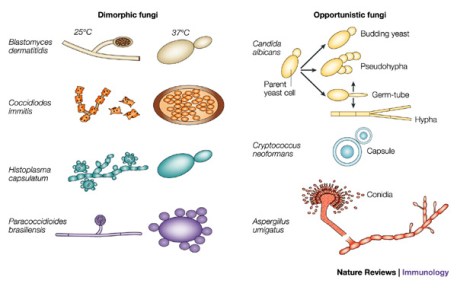
After bacteria, delivery of information on protists then fungus is the same, again giving every student the opportunity to fill in gaps and ask questions.

structure-euglena-anatomy-freshwater-protozoan-composed-chlorophyll-has-rudimentary-eye-vector-diagram-34424805nri1255-i1

Following lecture, to wrap up the lesson, a critical piece is to raise students to the analysis level, and figure analysis is one of the most effective closure activities in biology.  Sometimes I deliberately “mess-up”, and then use it to my advantage.  For example, at the end of this particular lecture I could post these foldable images and  ask students to identify two important points regarding each cell type, any goofs, and two possible interesting additions that could be added to each picture.  This analysis and extension involves small group discussion followed by an opportunity for me to stretch them for high quality answers in a large group discussion.

The students always wow me with what they notice and interpret.  In this type of activity, after hearing all of their answers, I reveal my thoughts as well, providing a nice wrap-up.

Screenshot 2016-02-10 11.58.46 copy.png

  • BACTERIA:
  • Important: no nucleus, prokaryotic like Archae, super small
  • Goof: Bacteria have very large circular central chromosomes in the nucleoid region, the smaller circular DNA are plasmids
  • Extension: Could add bacteriophage infecting it
  • PROTIST
  • Important: eukaryote so way larger and more complicated than bacteria, mostly single celled
  • Goof: This is obviously a plant cell due to its square shape and cell wall of cellulose.
  • Extension: Should have animal-like, plant-like, and fungus-like all in picture
  • FUNGUS
  • Important:  heterotroph and should never have a chloroplast
  • Goof:  over-simplified cell missing some structures
  • Extension:  Could draw multi-cellular mushroom with hyphae and mycelia


This post discussed the importance of note-taking and lecture style.  The next one will include more details on student notes as well as a lecture an example via Google Slides.

Diabetes, frogsicles, and #singfornicole

When people think of diabetes many of them associate it with obesity, which is actually correlated with only type 2 diabetes.  This post will focus specifically on type 1 diabetes, which is an endocrine system problem.  The endocrine system, as any biology teacher knows, involves delivery of hormones.  I never know when high school students walk into my classroom if they know anything about hormones other than that testosterone and estrogen makes them have massive make-out sessions in the hallways and elsewhere.  I don’t know if they know about growth hormone’s affect on development, adrenaline’s fight or flight effect, or the importance of insulin.

They do come with a preliminary knowledge of the digestive system, as shown in the video here.

digestion video

As shown so graphically, the mouth and stomach mechanically and chemically digest food.  Enzymes in our saliva start the breakdown (delighting our tastebuds) and the enzymes in the stomach, not the acid, is what actually further digests food.  The acid simply allows the enzymes to shape correctly, otherwise mis-folding occurs, rendering the protein useless.   The stomach acid is also for defense purposes, as it is inhospitable to other living organisms and can destroy microbes that we unknowingly ingest.

What I don’t think students have considered is that the journey continues.  The video does a fabulous job of showing the post-stomach digestion as well as the villi, the hair like projections that significantly increase the surface area of the small intestine.  Their job is like that of a towel, to increase efficiency of soaking up material (the fluffier the towel, the more effective).  The soaked in sugar is then transferred into the circulatory system and delivered to every single cell in our body, which is critical because our cells cannot function without food.  The pancreas, a low profile organ, plays a vital role in what comes next.

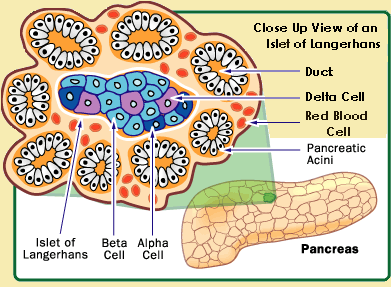
islets_of_Langerhans

website source

Most of the pancreas functions as an exocrine gland, meaning its secretions don’t circulate with blood like hormones.  Its function is to deliver digestive enzymes directly into the small intestine.  The rest of the pancreas, the endocrine portion, consists of the isles of Langerhans, literally little islands scattered throughout the pancreas.  These islets contain beta cells that secrete insulin and alpha cells that secrete glucagon.  These hormones have opposite functions and both are critical for blood sugar regulation.

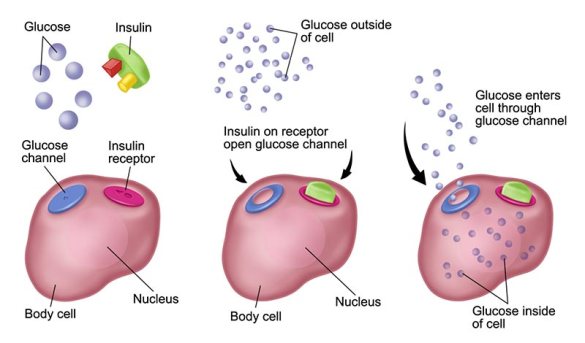
The glucose sucked in the blood by the small intestine is far too big to diffuse across a cell membrane.  It needs a channel protein to pass, and the insulin secreted by beta cells in the pancreas acts like a key that allows that gate to open and let glucose in.  See here for an article that describes this action in detail.  The picture below gives a great visual.

type-2-diabetes

So, if cells need food and insulin opens the gate for food to enter, why are these gates regulated?  Why do they ever close?  They close because if glucose isn’t in the blood, it can’t feed brain cells, and if brain cells lack food, they stop working.  If there is not enough glucose in the blood to be delivered to the neurons in the brain, hypoglycemia results and the consequences are disastrous.  If low blood sugar does not get treated, it will result in death.  I had a student a few years ago whose sister died in her sleep from hypoglycemia, and it broke my heart.  If you click on this link,#singfornicole, read her story, and then press the play button, you will understand.

Here is a very simple movie that I used to show to my 9th graders because it has such great visuals at the cellular level.  It is low level and simplistic but can be a fabulous intro and provide an engaging opportunity for extension.  If they watch this video, then design a paper or project on how it could have been made higher-level, it would be an excellent analysis and synthesis level activity that reinforces the content.

easy diabetes movie

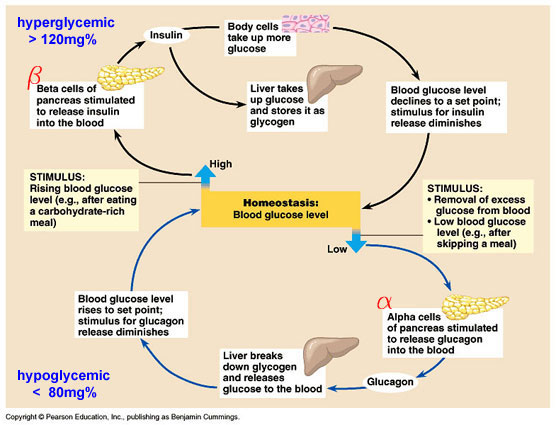
Occasionally, people without diabetes can feel hypoglycemic and a little dizzy.  Most likely what is happening is that the balancing hormone glucagon is delayed for some reason. Glucagon is actually present and functions correctly in diabetics, although it cannot be effective with sustained hypoglycemia.

Glucagon’s role in blood sugar management is to stimulate the liver to secrete glycogen, an animal starch (complex carbohydrate) that has long chains with branches of glucose.  It is like an emergency sugar reserve. If the liver dumping glycogen into the bloodstream is ineffective and blood sugar continues to plummet, seizures can occur, a last attempt by the body to release sugar via muscle contractions (muscles are high energy using cells and have sugar reserves as well).  I knew a man who had diabetic seizures occasionally, and after every one, he would have these things I called “eye spots”, little red dots surrounding his eyes.  I never knew why, but later I looked it up and as it turns out, it is actually  petechia, a condition arising from severe physical trauma.

Here is a website that features this image and offers a fabulous overview on how insulin and glucagon normally coordinate.

c45x10glu-homeostasis

Diabetics not only have to worry about hypoglycemia, but if they fail to take enough insulin and hypergylcemia results, consequences can be just as deadly.  Severe hyperglycemia will result in coma and eventually death because the starving cells have no access to energy and stop metabolizing.

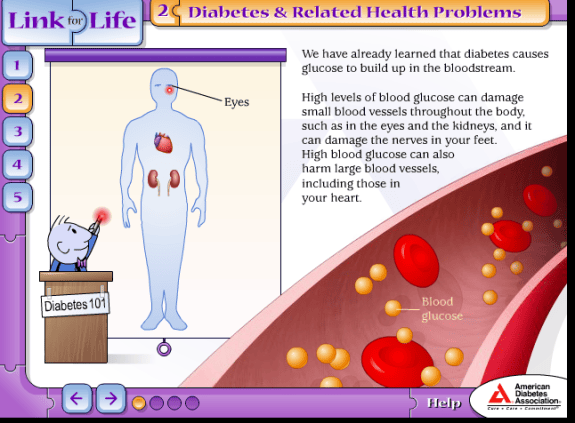
With diabetes, it is possible to live with bouts of hyperglycemia that are treated before becoming life-threatening, but after years of sustained high blood sugar, even if it is on and off, it can be detrimental.  You might have heard that diabetes is associated with foot amputations, which is true for a variety of reasons.  First, with a lack of insulin cells are starved, and they have no access to fuel.  Also, high blood sugar is thick and over time will harden and constrict small blood vessels (capillaries) resulting in poor circulation.  Starved neurons result in nerve damage and decreased sensation.  People with desensitized feet can injure them and not know which can cause infection and deformities.  Diabetes is also associated with blindness because perpetual high blood sugar can similarly constrict the capillaries of the eye, depriving it of critical materials.

I honestly don’t know how this disease can even exist.  Pre-pharmaceutical industry, there was no insulin for treatment.  How could our ancestors have survived this disease long enough to pass the gene onto children?  I know it is a delayed onset and can arise in childhood, but how many 10 year olds are having babies?  It is not just genetic though, it has been proven that that there is an environmental component as well.  There is a book that suggests maybe diabetes could provide a selective advantage in certain environmental conditions.  If that is true, then the gene could have arisen in a specific population, then spread as humans became more mobile.  Chapter 2 of a book called Survival of the Sickest by Dr. Sharon Moalem offers a compelling argument that diabetes has a selective advantage in colder climates.  Her hypothesis is supported by its overrepresentation in cold regions (Finland, Sweden, and Norway) and the existence of a wood frog that utilizes high blood sugar like antifreeze to prevent from hypothermia.  She discusses the wood frog, Rana sylvatica, that externally freezes solid in cold weather after drastically elevating its blood sugar to maintain cellular osmolarity, then comes back to life when it defrosts.  I am not kidding.  Check out this video.

However diabetes entered our gene pool, it is a tragic disease.  Great news is that with treatment, it can be managed.

1922 was when insulin was first used on a patient.  The discovery resulted in a Nobel Prize shortly after (see article).  Now, there are insulin pumps, which mimic pancreas activity by delivering low, basal, rates of insulin with the ability to administer high doses with meals.  Insulin shot therapy is an alternative treatment, and there is long acting insulin designed to provide that basal, low dosage, then rapid acting insulin administered with meals.  Shots are less predictable than insulin pumps making it slightly more difficult to maintain stability, but they are less expensive, making them an attractive choice for therapy.  Additionally, there is the ability to monitor blood sugar levels with finger pricks that release a drop of blood and are analyzed by a small machine.  There are also constant glucose monitoring systems that can be worn and synced to smart devices to deliver alarms, but they are expensive.

There are also more advanced therapies that are in the process of being developed.  Islet transplants are an experimental procedure, and here is a scholarly explanation, but as a scientist, I see two fundamental problems with it.  First, diabetes is an autoimmune disease, it is when the body destroys its own beta cells.  If there is something about the cells that the immune system recognizes, which is a real possibility, it seems likely that the body would destroy the transplanted cells.  Also, any organ donation means the recipient has to take immunosupressants for life so that their immune system does not destroy the foreign cells.  Is it worth taking immunosupressants and facing vulnerability to other illnesses when diabetes can be managed with a pump?

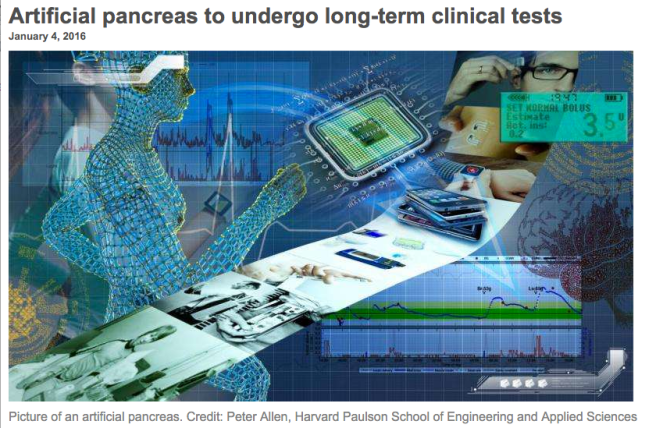
There are also hopes of developing an artificial pancreas, which seems impossible to me, but 20 years from now it might very well the preferred treatment, if people can afford it.

pancrease picture


RNA, Cinderella of the cell

DNA is the recipe for life but it is just letters, it doesn’t do anything on its own other than sit in the nucleus of our cells; it is protein, what DNA is translated into, that directly determines our characteristics.  Enzymes, a type of protein, are critical for every single chemical reaction in our body, and life is simply unable to create the complexity that it does without their significant biological help.  The universe is driven by the principle of increasing entropy and randomness.  I always illustrate this concept to my students by mentioning  necklaces or TV wires.  No matter how well arranged they are, left alone for a while, they will turn into a tangled mess, and they do it every time.  The principle of entropy is the second law of thermodynamics, and it is simply that the universe moves towards disorder.  There is no way getting around annoying interlacing TV wires unless you straight-jacket them.  If this is true, if mayhem is a law of physics, how can we have eyeballs, an architectural miracle, a highly organized structure that cannot even be artificially created due to its complexity?  ENZYMES.  These enzymes facilitate reactions and allow us to utilize the energy in the food we consume to build our machinery.  Without enzymes, without these proteins, life as we know it would not exist.

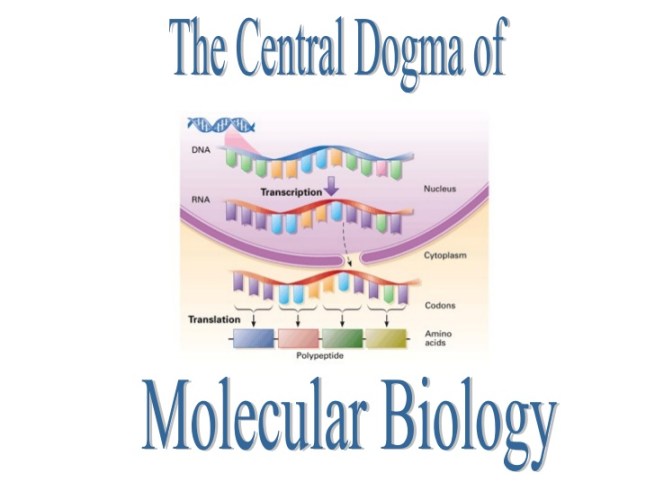
This DNA/Protein relationship is critical to life on so many levels.  We need DNA for instructions, and we need protein to override the second law of thermodynamics.  The process of making protein from DNA is recognized in biology as the central dogma because of its importance.

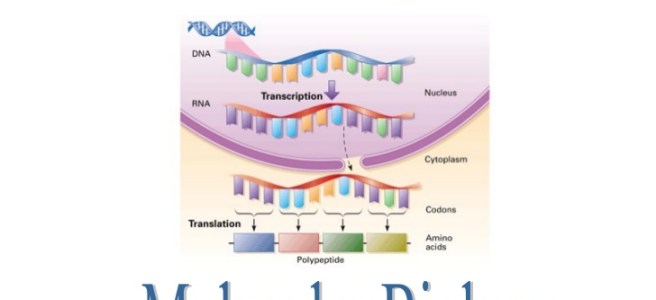
What has bothered me for years is that the role of RNA in this whole dogma is underrepresented.  It does not have the reputation of its step-sisters DNA and protein, and it is the one who does all the work with none of the glory.  RNA copies the DNA code and translates it into protein.  There are three types of RNA involved in protein synthesis:

  • messenger RNA – mRNA
  • ribosomal RNA – rRNA
  • transfer RNA – tRNA

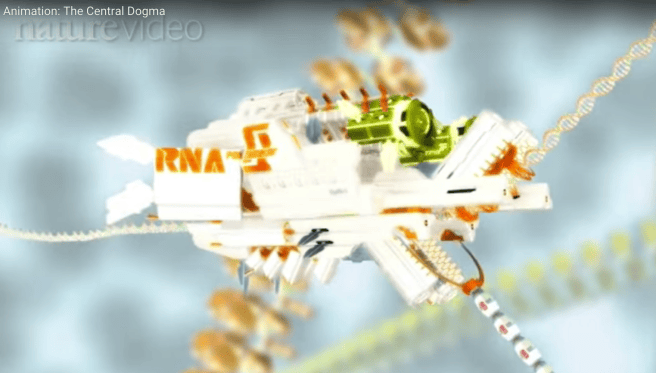
I discussed protein synthesis and shared an activity in The Human Genome post prior to this one that highlights the roles of these three RNA molecules.  As a closure to that topic, I wanted to share an amazing Nature Video found here.

rna.png

This video is breathtaking because it displays the complexity of protein synthesis in a spectacular format, likening essential proteins to complex aircrafts.  It shows that transcription, or copying DNA into mRNA, is a highly regulated process and that translation, or building the actual protein, is like an assembly line.  There is also small nuclear RNA (snRNA) that is involved in this process, although it isn’t shown.  snRNA creates a spliceosome which snips out parts of the message before it is made into protein.

RNA, specifically mRNA, tRNA, rRNA, and snRNA,  should be commended for their essential role in protein synthesis.  The following types of RNA should also be commended because they are adorable, interesting, and have a more indirect role in protein synthesis by regulating gene expression.

  • micro RNA (miRNA)
  • small interfering RNA (siRNA)
  • piwi-associated RNA (piRNA)

These three types of RNA encoded by our genome are tiny, less than 30 nucleotides.  Both miRNA and siRNA actually bind to complementary sequences and block expression of certain genes and are actually regulatory in nature.  RNA interference is a direct result of miRNA and siRNA expression (see the website and video here for a great explanation).  RNAi is a technique commonly used in biotechnology to suppress expression of genes to ascertain their function.  siRNA and piRNA are associated with closing chromatin, blocking expression of certain genes by making them inaccessible with the protein machinery required for copying.

Protein synthesis is so complicated and involves a hierarchy of events.  Today’s goal was simply to highlight the essential role of RNA and to introduce the entire RNA family.

central-dogma-and-protein-synthesis-1-728


Image from this website


The Human Genome

In 1953, it was discovered that DNA was arranged in a double helix.  Only 50 years later, the entire human genome was sequenced, all 3 billion base pairs.  Now it is 2016, and we are in the post-human genome sequencing project era.  It has been a little over a decade since the genome was fully sequenced, and scientists have been able to identify and classify DNA, discover how genes are regulated, identify how DNA is copied and passed on to daughter cells, link genes to certain diseases, but there are still so many questions that remain to be answered.

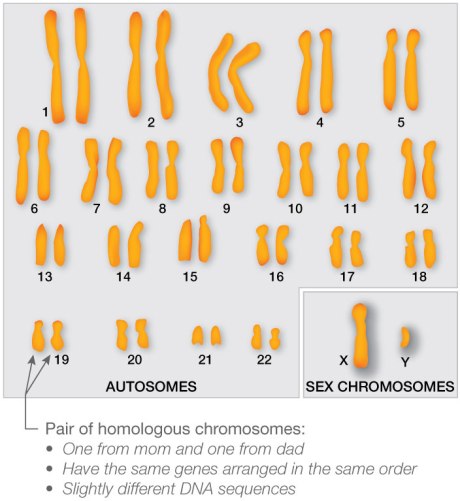
DNA is the language of our cells, except it has four letters (A, T, G, C) instead of the 26 letters in our alphabet.  Those 4 letters combine in different ways to give your body instructions on how to function.  Thanks to those 4 letters, you have a functioning heart, stomach, ball and socket joints, you name it.  DNA is arranged in 23 chromosomes, kind of like a 23 volume encyclopedia (for an awesome supplement, click here, source of the karyotype below).

karyotype

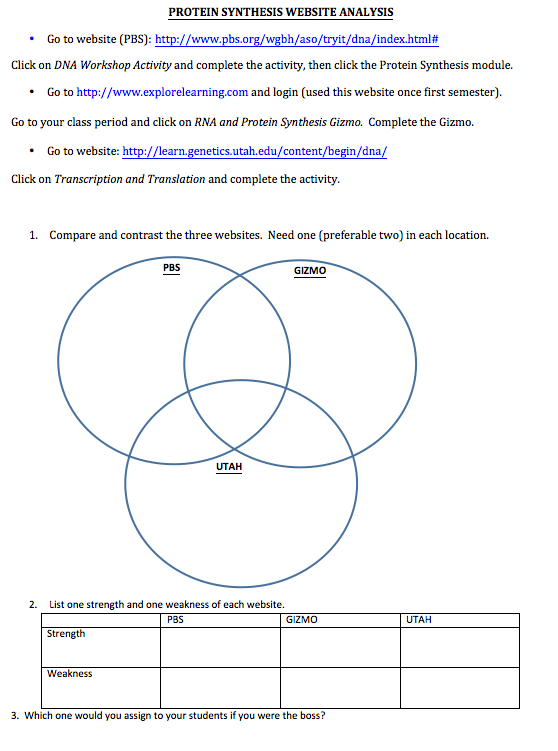
You would think that each chromosome codes for a group of related genes, yet cooperating genes are scattered all throughout.  DNA is advertised as the genetic code/recipe/blueprint that provides instructions to make protein.  To help illustrate this to high school students, I developed the activity below because it provides a meaningful opportunity to illustrate the concept that in order to make protein, genes are copied (transcription) and interpreted by RNA (translated).

Screenshot 2016-01-14 22.03.47 copy

*Explorelearning.com has a fee and it might not be provided by your school *

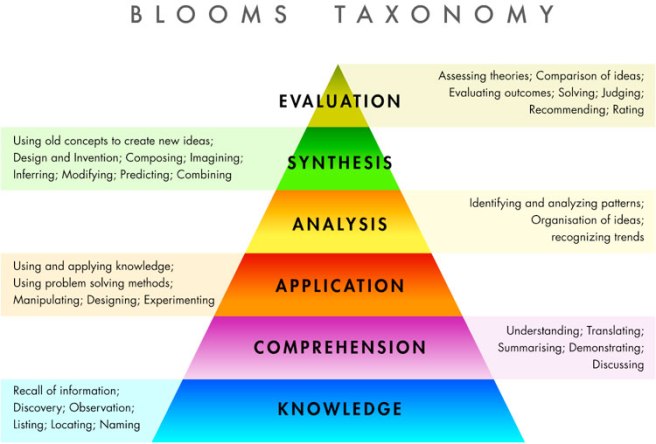
I assign it for homework the day before we discuss protein synthesis in detail. The website involves interactive protein building on a very basic level.  The Venn diagram section, the compare and contrast, is a great analysis activity that reinforces the concept of transcription and translation and forces students to process at that analysis level.  The last portion involving identifying strengths and weaknesses is at the evaluation level, the mecca of learning.  Working up the Bloom’s taxonomy ladder like this is critical scaffolding that builds a strong foundation in order to hang details on, making content retention easier.

blooms_taxonomy

*Check out this wordpress blog here, the source of this picture.  It does a great job explaining that the knowledge level questions teachers spend their time asking in class are less effective at content retention than high levels*

The warm-up the next day also scaffolds.  At the beginning of class students discuss their answers to review the concept.  At this point, even the ones that didn’t do the assignment (a sad reality of high school) have the opportunity to ask questions when their peers explain it in “kid” language (comprehension). Then, as a large group, I quickly click through each website and ask groups to present what they liked and what they didn’t (analysis).  After about ten minutes, then they are primed and ready to hear all the details that are up ahead.

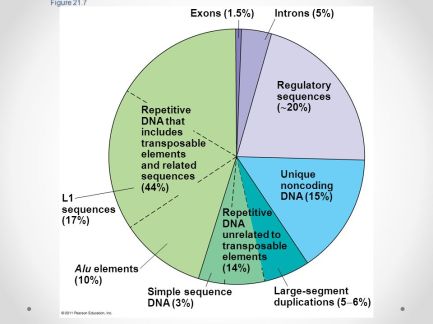
Once students have achieved mastery of protein synthesis, AP level classes will then go on to rock student’s world and tell them that protein is actually only 1.5% of the genome (the exon portion of the pie – see image from Campbell Biology, 9th edition, figure 21.7).

campbell


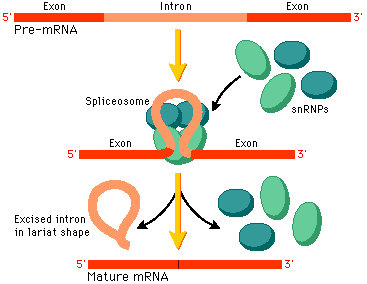
The fact that only 1.5% of all the 3 billion base pairs make protein is astounding.  What about the rest of it?  The introns (5%) are scattered within the coding portions of our genes (see picture from this website).  In eukaryotes, genes have “alternative splicing”, meaning one gene can code for several different proteins by rearranging the location of the exons and introns within its coding sequence.  For example, the image below has pre-mRNA for one of its protein.  That same sequence might have different exons and introns arrangements, making an entirely different protein.

eusplice

Regulatory sequences (20%) include promoters, which are regions that recruit transcription initiation, allowing the gene to be copied.  An entire complex with many specific and non-specific proteins binds at a region upstream of the gene, and it requires the presence of many interacting proteins.

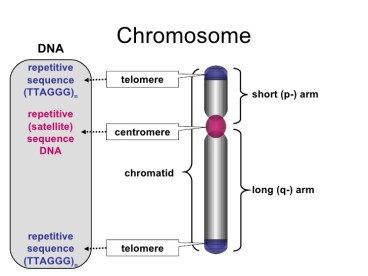
The unique noncoding DNA (15%) includes pseudogenes, or nonfunctional sequences that used to be genes.  Repetitive DNA unrelated to transposable elements (14%) include centromeres and telomeres (see image taken from this website).

practical-1-07-15-728

Telomeres are like the protective plastic at the end of your shoelaces (those actually have a word, and they are called aglets).  At every division, a the telomeres shorten and shorten, and after about 50-100ish divisions, when the telomeres are no longer present, the cell commits suicide (cell suicide is called apoptosis).  Seems like a tragic ending, but let’s face it, once the aglet comes off of the shoelace they go in the trash because the whole thing will unravel and be nonfunctional.  The same phenomenon would happen with DNA.  If the cell continued to divide, important genes would be destroyed, completely eliminating machinery for critical biological processes.  Also, it is believed that this apoptosis prevents cancer, as with each division, more mutations accumulate, and any change in DNA has the potential to be deadly.

A whopping 44% of the human genome contains transposons, the wandering genes I mentioned in my last post.  Some are believed to be silenced, most likely by their location in tightly coiled heterochromatin.  Some are associated with disease .  Others appear to be regulated by a special type of RNA (also coded by DNA) called siRNA, which binds to and inhibits the transposons activity.  Transposons baffle me – with 44% of our genome mobile, how is there not massive mayhem?  Genes would be disrupted and become nonfunctional if all 44% moved randomly throughout their lifetime.  Surely, there has to be some sort of recognition site, or maybe the siRNA and its family members have a more significant role in silencing that is believed.
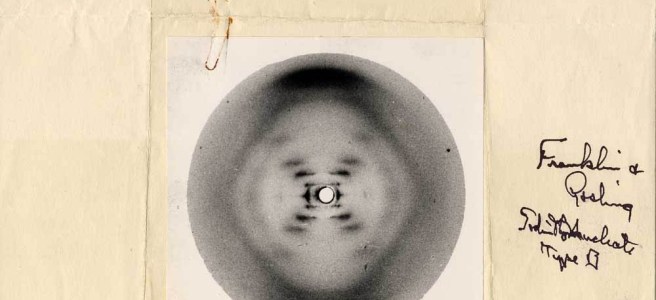
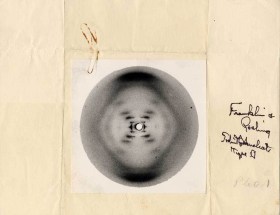
The amount of genetic information that we do not know about seems infinite, yet progress is still made and drug therapy is still developed that effectively influences our biology.  The very beginning of this impossibly complicated quest involving DNA all started with the discovery of the double helix.  Although Watson, Crick, and Wilkins were the Nobel Prize winners for this discovery, a woman named Rosalind Franklin provided the evidence that led to their epiphany.  Her famous photograph 51, shown below, was stolen from her lab by Wilkins, who allegedly took it to Watson and Crick, and her picture is ultimately the reason the three men received the Nobel Prize 9 years later.

Rosalind_Franklin_Plate_1_DNA_B_form_1000

She did not achieve the Nobel Prize because she had passed away, most likely due to the intense x-ray work she used to study DNA (see the x-ray diffraction photograph 51 above).  Not only did she not receive the Nobel prize, Watson wrote a book called The Double Helix in 1968 and ruthlessly criticized her.  To see a fascinating movie about the whole saga, click here.  Unlike my other clips, this one is an hour long movie.  I was enraged on her behalf when I first saw it, and then proceeded to go home and show my entire family so that they would know this important story, one I think the whole world should be told.

Next post, I will focus on RNA.  It is bothering me that the genomic pie chart above does not show the portion of DNA that is responsible for RNA synthesis, as there are at least seven RNAs (mRNA, tRNA, rRNA, siRNA, miRNA, piRNA, snRNP) that are functional and critical. There isn’t a lot of hype about the RNA, but it is just as critical a piece of the puzzle.


Bacteria: antibiotics, asexual, ambiguous

As my blog’s intended audience is biology educators, as always, I will pepper my discussion with resources I have used in the classroom that have facilitated student understanding and success.  This post will focus on the most prevalent prokaryotes, the kingdom Bacteria.  It will discuss how antibiotic resistance is an example of natural selection, thus providing a perfect bridge between microevolution and macroevolution (see my previous evolution posts) to bacterial structure and function.  This lab, in my experience, clearly conceptualizes how bacterial diversity can lead to natural selection of superbugs like MRSA.  An extension article involving MRSA found here was published in the prestigious journal Nature and is a fantastic higher level analysis that could supplement a lesson on antibiotic resistance.  Finally, my post will touch on the ambiguity of bacterial roles in ecosystems, as they can be friends or foes, depending on the strain.

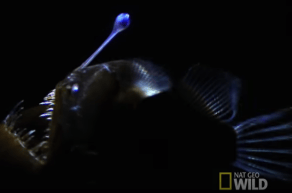
Bacteria have a nefarious reputation, yet they perform essential ecological functions; the photosynthetic variety provide life-sustaining oxygen, and the decomposers prevent ubiquitous piles of dead organisms rotting in the street. On a more interpersonal level, the flora/fauna-fest that resides in our intestines help us with digestion, and many other organisms benefit from bacteria as well, such as the angler fish shown in the video here.  The clip tells the story of two interesting co-dependent relationships.  One involves a beautiful bioluminescent bacteria that provides light in the deep ocean so its host can find prey.  The other co-dependent relationship, which has nothing to do with bacteria, is just a bonus.  I dare you to watch and witness one of the strangest romances I have ever seen as well as mother nature’s twisted side. 

Screenshot 2016-01-11 15.35.54 copy

There is also a dark side to bacteria, as we all have experienced.  A relative lightweight is the bacteria that feeds on debris in our mouth.  Brief note – regarding the human mouth, what a dichotomy!  We have sensitive taste buds where we can worship vices like Godiva cheesecake, yet we also have this gaping hole in our face that invites bacteria as wells as viruses, ill-intentioned protists, and worms into our bodies with open arms.  I suppose the size and complexity of the human body requires an enormous amount of energy to maintain, so it is an unavoidable reality that we need a mechanical powerhouse with teeth, jaws, and muscles, but it is a shame we have this unfortunate vulnerability as well.  Plaque is an unavoidable enemy we encounter daily, and if we are lucky that is the only bacteria we meet, because the heavy-weights like tuberculosis and syphillis can be deadly.  Even the notorious throat-infecting strep that once hid undetected in my son by displaying symptoms of stomach cramps instead of a sore throat could have been deadly if left untreated.  Pathogenic bacteria are cunning tricksters and shameless opportunists.

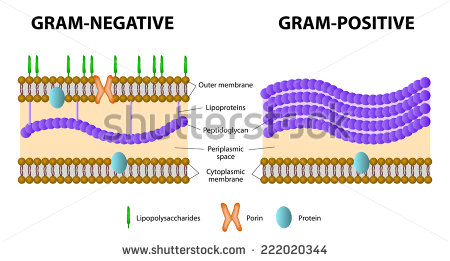
Thankfully, we have a tool to outwit these parasites.  In this case, the pen is indeed mightier than the germ because 24 hours a day, ERs are open and any doctor can easily write a prescription for an antibiotic. The accidental discovery of Penicillin in the late 1800s began an era of antibiotics, and now there are over 100 that are specifically utilized to treat different offenders.  Before treatment, however, doctors must first identify the pathogen by determining if it is “Gram negative” or “Gram positive” (see shutterstock image below).  

stock-vector-bacteria-difference-of-gram-positive-from-gram-negative-bacterial-222020344

Notice that the glaring difference between the two is in their cell wall.  Gram-negative bacteria have a thin layer of a complicated carbohydrate called peptidoglycan sandwiched between two membranes, while Gram-positive have many layers of peptidoglycan on the exterior.  Gram staining is an identification technique that takes advantage of the differential absorbance of a bio-stain due to exterior structure (see image).  Gram-negative bacteria have an outer membrane which can make them more resistant to some antibiotics.  Also, many antibiotics inhibit peptidoglycan cross linking and are more effective on gram-positive strains.    Due to the variety in bacteria and specific mechanisms of antibiotics, doctors first must investigate the perpetrator so they can treat accordingly.

Despite the advancements in healthcare and increases in life expectancy since antibiotic use became routine, our arsenal of treatment is in danger due to the growing problem of antibiotic resistance.  Some aggressive bacteria are immune to even the most powerful antibiotics.  Think about this: if a single bacterium has a mutation allowing it to evade antibiotic attacks and can reproduce every 20 minutes, it would create 32,768 identical clones in just 5 hours.  If we do not have effective tools to treat a mutated strain that has become deadly, the consequences would be catastrophic.  Experience has taught doctors to prescribe antibiotics for a course of several days.  The first few days eliminate the majority of the infection; however, there are still some lingering bugs, and these are the ones that possibly have an advantage through a favorable mutation.  Continuing antibiotics is critical to make sure that even the scrappers, the fighters who simply do not want to go down, are eradicated, because if those fighters were allowed to grow free reign, it would be much harder to destroy them should they proliferate again because they have already become resistant (not necessary completely, it takes more than one mutation to reach that level of immunity, which is again why antibiotic treatments should be taken until completion).  

The public is not educated enough of the possible consequence of not following the prescribed regimen which can allow a resistant strain to establish residence and easily spread to humans that are in close proximity.  This and the inappropriate treatment of viral infections with antibiotics can lead to widespread resistance.  Far more antibiotic use than even in the medical field is in animal and plant production.  The non-discriminate use of antibiotics in our ecosystems in order to maximize profit is a massive contributor to the problem of antibiotic resistance.


The video below is FABULOUS at discussing and illustrating bacteria and the issue of antibiotic resistance.

ted

TedEd video

There is one more important point I want to make before signing off, and that is regarding bacterial reproduction, also known as binary fission.  It is hard for me to predict what pre-knowledge students have when they walk into the classroom, but I am pretty sure they know that humans reproduce sexually.  I am also confident that they know that plants reproduce sexually via “birds and bees” that transfer pollen (sperm) from one flower to another.  I have always wanted to show this clip from my favorite childhood movie to introduce plant sexuality, but I never have just because the content gets overly obvious.  A couple of paragraphs down I include an appropriate sexual innuendo that I do discuss, but only for this reason: biology has been compared to a foreign language due to the intense amount of vocabulary that it involves.  Vocabulary retention is a huge obstacle because if students don’t remember the words, no way can they achieve understanding and mastery.   Humor and mnemonics help.

Students already know sexual reproduction and what that entails, so silly movie clips are unnecessary; however, they may not know that bacteria reproduce asexually, which begs the questions of how do they get the genetic changes that make them resistant to drugs, and how do completely different bacteria with different sequences of DNA obtain the exact same mutation to become resistant to the exact same antibiotic?

The simple answer to bacterial genetic change is that they acquire mutation due to mismatches in DNA replication, and in environmental stress they even have the ability to increase rate of mutation.  This does not explain how resistance passes between species.

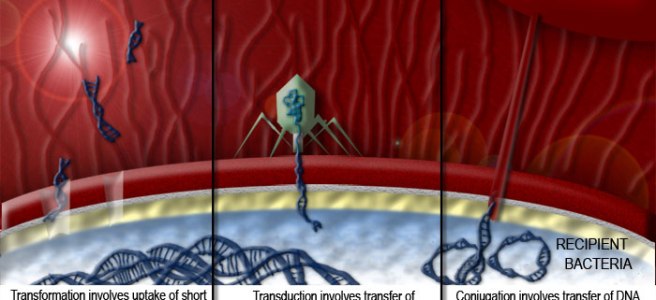
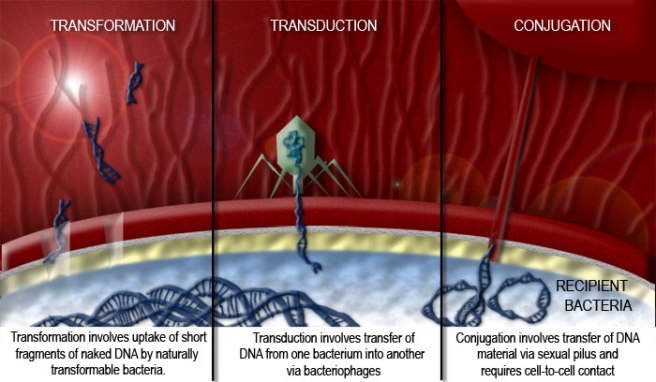
“Horizontal gene transfer” is a more complicated mechanism where bacteria obtain exogenous foreign DNA and incorporate it into their genome.  There are four types of horizontal gene transfer in bacteria, and the image below beautifully contrasts three of the four mechanisms (the image comes from a useful resource found here).

HORIZONTAL-GENE-TRANSFER-1

*The scary looking bacteriophage is simply a virus that only infects bacteria*

Note that conjugation is about as close as you get to bacteria sex , as it involves the direct transfer of bacterial DNA from one to another through an extension called a sex pilus.  This sexual innuendo I do not pass up simply because it enhances content retention. I familiarly dub “conjugation” as a “conjugal visit” and flat out point out the obvious analogy between the pilus and the penis.  I mean come on, they start with the same letter, have the same number of letters, and kind of sound like each other.  

A final method of genetic change in bacteria that can occur both internally and via horizontal gene transfer is through transposable elements.  These “jumping genes” switch their location in the bacterial genome through “cut and paste” mechanisms.  Specific DNA sequences act as tags for cutting, and enzymes including transposase switches the DNA around.

Interestingly, horizontal gene transfer can occur between species in completely different kingdoms, and the next post will focus on the eukaryotic genome (that of Animals, Plants, Fungi, and Protists) starting with their versions of transposable elements.


Evolution – evidence

To begin part 2 of my post on evolution, I encourage you to skip to minutes 49-56 of this mock movie clip.  To get the most out of this post, view the clip before proceeding.

I first saw the video at a conference in Houston, and it explains so well that natural selection is a theory, just as cell theory (all living things are made of cells) and atomic theory (all matter is made of atoms) are.  Cells and atoms are taught in schools with no controversy, and because evolution is the best explanation for biodiversity with volumes of supporting evidence, it should be as well.

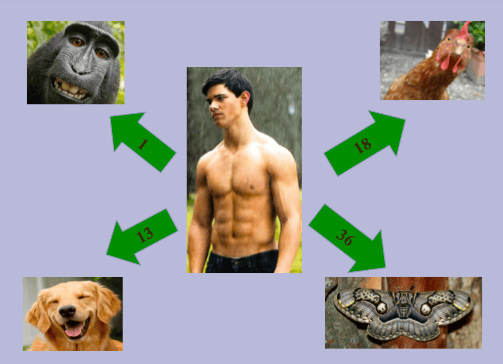
The video highlights the most significant evidence there is, biochemical analysis.  It illustrates the chromosomal similarities between humans and primates, and shows evidence of a genetic difference (fact), provides a logical and probable explanation behind it (theory) by examining DNA sequence and chromosome structure (fact).  Further biochemical analysis zooms into chromosomes to analyze DNA sequences, revealing a significant homology, or similarity across species, in the proteins that each gene codes for.  For example, cytochrome c protein, important in metabolism (in the electron transport chain in the mitochondria), has 104 amino acids.  See the following amino acid sequence differences in the image below.

Screenshot 2016-01-08 13.13.05 copy

The fact that out of 100 building blocks for protein (think of a paper with 100 words), that only one “word” between the two species is different strongly suggests a common ancestor.  If two students handed in a 100 word essay and there was only one word different, no doubt about it, they would have consequences for cheating.  It is too coincidental for so much homology to exist without some sort of commonality.  Biochemistry is the strongest evidence for evolution there is, and I imagine that fact, along with morphological analysis, is one of the reasons scientists realized that whales are more closely related to humans than sharks.

Speaking of whales, fish, and humans, before DNA sequencing and visualization, there was plenty of support for Darwin’s theory based simply on observation.  A very compelling evidence for natural selection are structures that are considered “vestigial”, or useless remains of something that was once important.  For example, whales have pelvises, but they are tiny and non-functional (suggesting their ancestors walked on land).  There is a species of fish that lives in caves that are blind, yet they have a collapsed eyeball covered by a thin layer of skin.  Obviously, they don’t use the eye, but the fact that it is there means they have the DNA for it, which suggests that they inherited that DNA from an ancestor who used eyes.  Humans have a number of vestigial structures including a tailbone and the appendix.

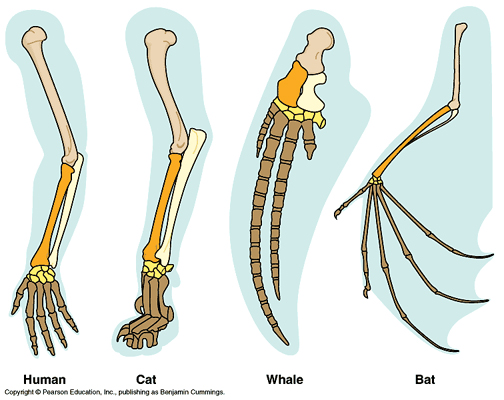
Homologous structures, alternatively, have similar structures but different functions.  For example, consider the human arm, cat leg, whale fin, and bat wing.  The mammalian structures serve very different functions, but if analyzed, have similar bone structure, location, and joints, suggesting common ancestry.

homologous

Note this is a Pearson/Prentice Hall Education image.

One of my favorite reinforcers to do in class is for students to do a t-chart on a large piece of butcher paper.  On the left they list as many vestigial structure examples that they can (without using their phone), and on the right, they list as many homologous structures that they can (sans phone).  I give them 5-10 minutes, depending on their engagement level, then we stop and have a contest to see who generated the most.  I start with homologous structures.  Each group presents one while explaining their reasoning, then we go around until all have been presented.
The reason for presentation is two-fold:  #1.  It is different, they get the chance to lead a large-group discussion, which is valuable.  #2.  I am the judge.  If they say a bogus homology, I will “object” and then the class will have a large group discussion to see whether it should be valid or not.  It is amazing what they come up with.  My favorite discussion was on the pair baleen and teeth.  That was one I objected to, just to stop and initiate further processing, and we had a very interesting discussion where they investigated using phones.  Then, we concluded as a large-group that they are, indeed, homologous.  To conclude the lesson, the winning group usually gets a high five or something, the uniting of homologous structures in the classroom.

Other evidences include biogeography, fossil evidence, embryological developmental similarities, as well as observable events like the finches or the peppered moths I discussed in the last post (here is a great activity on pocket mice from HHMI that includes worksheets, teacher guides, and videos, which is another great observable event).

After discussing the evidence for evolution, the best part of the unit is discussing the mechanism for it – natural selection.  Natural selection is synonymous with “survival of the fittest” and is impossible without genetic variety causing some organisms of the same species to be “stronger” than others.  A discussion of how “stronger” is referring to the presence of adaptations, rather than muscles, can be emphasized by imagery using this video.

jungle


Two of my favorite clips from this video are Bird Dance and Ant vs Fungus.  Chimpanzee Behavior is also interesting, but a little gross (after years of teaching experience, the “shockers” keep engagement levels high and initiate high-level discussion, so I show them in class).

In this video, there are so many different adaptations that students discover.  On the bird dance alone they discuss physical ones like feathers and behavioral ones like dances and female choosiness.  Post-video, I have them discuss their favorites, then each group presents an adaptation observed, initiating a large group discussion.  These kinds of activities (group analyzing and presenting) can reinforce concepts much better than simple lecture because it makes students process on their own and bridges curriculum to the real world. *PS.  Ant vs Fungus is the favorite of all students, and it is mine too.  It is amazing, breathtaking music, shocking, and definitely worth a look*

A funny video that discusses mating adaptations is here.  It is a little bit eyebrow raising, but I am telling you, the advantage of this is if you are short on time and can’t show a long movie like Planet Earth, this can serve as a great transition by getting their attention and initiating discussion.  Or it could be a great warm-up.

On Tuesday I will discuss a very relevant and evolution-related concept, antibiotic resistance, and will bridge to a new topic – bacteria.


Evolution – Darwin and Common Ancestry

My first few years of teaching I approached evolution with trepidation.  As a teacher in a public school in Texas, I walked on eggshells.  After a few years of presenting the curriculum, I became more and more comfortable with it and eventually shouted from the rooftops how interesting it was.  It is the most unifying theme of biological sciences, and it is an undeniable force that explains nearly every observation.

In my opinion, taxonomy, or the grouping of organisms, is the critical predecessor to evolution and should be discussed immediately before.  At my school, we started with the kingdoms, focusing on their differences in a broad, memorization type of approach followed by specific identification and details.  The emphasis on identification was with unicellular organisms via microscope work, as plant and animal diversity and details were subjects that would be investigated in much more depth later in the year.  There are tons of lab opportunities with these single-celled organisms by the way.  Cocci, bacilli, and spirilli bacteria are easy to identify, and calculating their size involves math and logic.  Gram-negative vs gram-positive staining and antibiotic effectiveness is another interesting topic that can be incorporated, as is bacterial presence in food like yogurt (see interesting Yogurt Lab).  Protists are a teachers dream because animal-like, plant-like, and fungus-like can all be easily obtained through vendors or pond water, and students can research, identify, analyze, present their favorite protist, and/or personify it with a mock Facebook page Mock Facebook Student Templates.  There are so many lab and enrichment opportunities with taxonomy, and if you go into the phylum level and investigation/dissection labs, there are even more.

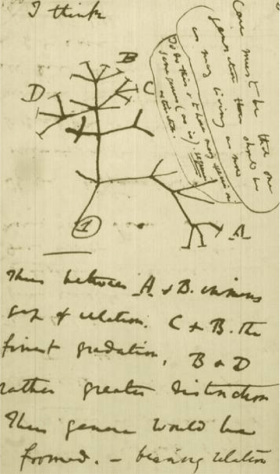
However you want to approach taxonomy, it makes an easy segue to bridge taxonomy to evolution via the discussion of phylogeny, cladograms, and common ancestry between kingdoms.  Darwin himself utilized this famous cladogram pictured below as an image to explain the diversity of species and the relationships between them.

tree of life

Introducing the “tree of life” above as Darwin called it, then translating it to a cladogram and simplifying it to only show kingdoms, I start evolution with a flat-out statement that, “Evolution IS NOT synonymous with humans come from monkeys”.  I explain monkeys are a totally different branch of descent and that in studying evolution, we are simply examining that our ancestors were different species that are now extinct.  Students have surely heard of Lucy, and if not, here is a quick youtube to stimulate some discussion: “Lucy” our ancestor, and an even better article found here.  Lucy was not a monkey, yet she was not a human.  She was somewhere on the road to Homo sapiens, the species we are today.  She and her people had children and the children of their children of their children (and so on, for 3.2 million years) branched into different species over time as environments changed.  Eventually, we emerged.

To illustrate such a point, a famous Darwinian example is the finches observed on the Galapagos islands.  On his naturalist voyage, he noted on these islands, that are peppered in the Pacific Ocean, the birds on different islands had many common characteristics but also many differences.  They were not of the same species because they could not reproduce, yet their similarities strongly suggested a relationship.  He used this observation to explain the notion that the common ancestor (bird on the mainland) offsprings offsprings offsprings (and so on, through however many generations) that traveled to other islands changed in subtle ways that were magnified over time, eventually creating another branch in the tree of life.

A simple interactive explanation can be found here: Galapagos Bird Explanation.  A classroom activity that I have found to be fun and get the point across can be found here: Battle of the Beaks.  To make the activity a higher level one, as well as a digital one, students could be asked questions on Google Forms like this one Google Form Example and incorporate another example for extension Peppered moth extension

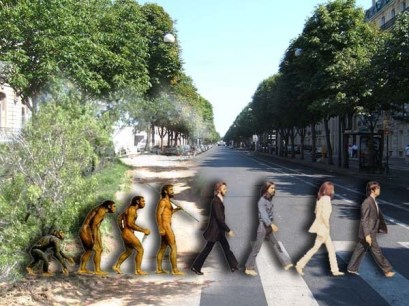
After establishing the concept of common ancestry and that we did NOT come from monkeys (we are different branches of evolutionary tree) and showing this Beatles analogy that beautifully shows speciation in a clever way…

1216072665VumQTEp

…I then profess my love for Charles Darwin, I called him my boyfriend before I got married.

Charles Darwin is my hero.  His conclusions on heredity without doing experiments like Mendel or without knowing about hereditable factors (not discovered until Griffith with his famous transformation experiment in the early 1900s) were genius considering they were only based on observation.

I went to a conference in Houston once and attended a talk from a man who was as passionate about evolution as I have become – in fact, he might be the reason I pretty much attribute every biological concept to evolution in some way.

The first thing he did was give a brief biography on Darwin that made me fall in love with the man.  Darwin LOVED science, even though he was slow in grade school, and was pushed into med school by his father simply because he didn’t really have a professional direction.  He hated it and was the kind to faint at the sight of blood.  After dropping out, he joined the clergy and became a naturalist (one who studies nature).  He was asked to travel on the voyage on the ship the HMS Beagle and roam around the world to observe and report on biological attributes of different places, and he was delighted until he stepped on board and became seasick.

One of his destinations was the Galapagos Islands, where not only did he observe birds and their likenesses, but he also observed other life forms, including turtles.

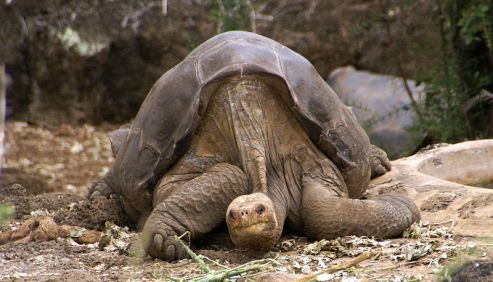
Here, the man went on a tangent that I will never forget for the rest of my life, so I will incorporate it, just because it is interesting if nothing else.  He talked about the turtle shown below, Lonesome George (rest in peace), the last of his species that could have been as old as 150 years.  This talk was prior to 2012 (the year of George’s unfortunate death), and the presenter revealed that scientists had been trying for years to get Lonesome George to mate to continue his line, but George simply could not in captivity, despite them going to extreme measures.  I cannot imagine what that entails beyond dim lighting and Barry White.

800px-lonesome_george_-pinta_giant_tortoise_-santa_cruz

After his brief fun fact about my favorite turtle, he then described Darwin’s personal life.  Post-traveling, Darwin went back to London and married his cousin Emma.  In deciding on whether or not to marry her, ever the scientist, he wrote a list of pros and cons of the institution of marriage to confirm moving forward:

Pros: children, companionship thats better than from a dog

Cons: loss of bro-time, probably will get fat

Evidently, the pros out-weighed the cons, and he married her and they had a wonderful life together.  She loved him deeply (way better than a dog).  He was ill much of the time with an undiagnosed disease, and Emma cared for her sickly husband unwaveringly.  She would read to him every night and play the piano for him (she was trained by Chopin).  They played backgammon every day and went on walks.  Unlike most men of his peerage, he didn’t rely on a governess to occupy his children’s time but instead gave them his attention.  He had ten children, and two died as infants while one died at ten, breaking his heart.

He never lost his love for science.  Every day, sometimes more than once, he would go on a walk on a gravel path near his home.  Depending on the complexity of the problem, he would stack stones prior to walking.  He had a walking stick and knew he had a tendency to get lost in his thoughts, so each circle or lap, he would knock a rock down until he had none left, thus ending his musings and sending him back to his family.

I could go on and on about evolution, but instead of continuing, I am going to break up this post and discuss on Friday the evidences for evolution and some ideas for activities.  Stay tuned…

If you have time for utter-silliness…My students for my birthday one year due to my constant mention of Darwin made me a youtube e-card featuring him:  The Birthday with Darwin -scroll to the end after the random gingerbread appearance for the Darwinian debut.  PS.  The randomness of this video not only makes me smile because it was so kind of them, but also it reflects their savviness with computers and solidifies my commitment to incorporating technology, it is their language.

The Nervous System

It is always bittersweet putting away the Christmas tree and holiday décor. On one hand, it is a blessing to return to routines so we don’t gain any more weight or turn into mind mush from too many movies. On the other, it is sad to say goodbye to the free time with family and friends and the time to curl up by the fire with hot chocolate and a new book.

The holidays are so stimulating and delight our senses as neurons fire and send impulses to the pleasure center of our brain. Every sense is inundated – pervading Christmas music rings in our ears, taste buds flood with pumpkin spice latte or whatever deliciousness you prefer at Starbucks, the smell of firewood and gingerbread permeates our homes, and finally, the visual sensations are displayed in our neighborhoods and retail hubs. Yep, Christmas-time sights, smells, sounds, and the accompanying carbohydrates over-stimulate our brain, and when it comes time to take down the ornaments, a mild withdrawal begins.

However, the New Year brings with it a window of opportunity to start over and erase the bad decisions from last year. People write lists of promises to themselves, which might only last a week or a month, but at the time they are written it is with the feeling of invincibility, as if we have already met those goals. So as our neurotransmitter party subsides, we look ahead with optimism.

This post will focus on presenting a meaningful lesson on nervous system structure, function, and mechanisms.

Lesson Planning:

  1. Warm-up
  2. Delivery
  3. Incorporated Breaks
  4. Lab/Activity
  5. Closure

Notes:

Lab/Activity can really go anywhere. Sometimes it is great to investigate a concept before getting into the nitty gritty, inquiry is powerful. Sometimes, however, it is best to deliver content first, it just depends.

As much as you can, make biology relevant. If you drone on about the biochemical aspect of the hydrophobic/hydrophilic nature of a transmembrane receptor protein in a neuron, whose function is dependent on the shape of a neurotransmitter that will stimulate an action potential through ion movement…well, if you get hung up on the details without peppering any relevance, it will be hard to keep their attention.

Also, personal anecdotes serve a few purposes – they make biology relevant and they build relationships. If my objective is to teach the nervous system, no matter the time of year, I personally would focus on the sensory stimulation of the holidays. I would talk about our visit to Vitruvian Park in Addison, TX, this year and show pictures we took (it is so beautiful, see the picture below – it is a park with illuminated trees by a lake that reflects the trees perfectly, like a mirror).

christmas sight

Or maybe I would show a you-tube as we get started, probably this Bono version of the Band-Aid Christmas song (they never play this version, but I love it. I specifically love how he changes the words to “tonight we are reaching out, and touching you” https://www.youtube.com/watch?v=i1jeiC-JEsI

Getting started with a personal story stimulates conversation, perks them up, and is a great segue into a lesson. 

Lastly, be flexible. The class before might have gotten off track so starting with a story wouldn’t be the best choice. Or, the class yesterday maybe discussed neuron structure, so a better way to start would have them take a note card and on the front draw and label a picture of a neuron and on the back write a quick essay about how it works

Keeping all that in mind, a tentative lesson on the nervous for me would look like this:

  1. Start with some sort of story, and link in the senses, as I did above. Discussing summer would work just as well, or a trip to Italy, if you are lucky enough to have been there.
  1. Bridge the story to the content and be deliberate about scaffolding. Instead of jumping into a lecture on action potentials and neuron structure, I would start with the eye itself. In AP biology, there is no requirement for them to know exact structures of the brain or eye or ear, but they do need to know high detail regarding neurons and action potentials. Even though eye structure is not critical, I would use it as a model to emphasize neurons, action potentials, and connections to the brain. I would let them know that the eye itself is not critical to memorize, but that what I want to focus on is the sequence of events.
  1. The higher the level of the course you teach, the longer these lectures are going to take. It is really important that the lectures are not words and words and words for them to copy – show an image and discuss it with the expectation that they take notes. Once the image has been analyzed, have students discuss with each other the five most important details they think they should have written down. Then, a few minutes later, after they verbally process it with the person next to them, show a slide with the important details in words so that they can add to whatever they have already written. If they are copying while you are talking, they are not processing a word you say. You need to train them to take notes based on your words and ask questions when they don’t understand. Forcing them to be engaged enough to ask questions as you are lecturing will increase their content retention ten-fold at least.
  1. After several image discussion/analysis, student group recaps, then revisiting as a large group and reinforcing the important concepts, take a break. I used to get cow eyes from Owen’s Sausage factory in Richardson, TX (they would donate them to education) and kids would actually dissect the eye, take out the lens, and use it as a magnifying glass to read newspaper print. That kind of activity is such a hook for them, even the ones who think they will get nauseated and can’t handle it find themselves engaged.
  1. Dissection is not always a viable option, but there are other ways to take a break, especially these days with the internet. Anything you can do to harness their obsession with social media is just smart. One time, I had them find memes and post them on twitter. You could have them do that with anything that had to do with an eye. Or, you could have them make an infographic on neuron signaling (not necessarily on the computer, they could do it on butcher paper as well).
  1. Closure is critical. Reconvene as a large group and ask high level questions about the content. Let them know extensions they need to do (there should always be some sort of extension, whether it be due the next day or next week).

Tabula Rasa

It is funny when a word or phrase that you haven’t thought of in a million years starts seeping into your consciousness over a period of a few weeks. I started thinking of the phrase “tabula rasa” when I was teaching the other day.  We were discussing stem cells in biology class and how the amazing thing about them is that they are truly blank slates. Every single cell in our body has the exact same DNA, yet in adult cells, only certain portions of DNA can actually be read. In contrast, the chromosomes of stem cells are flexible and their DNA is ready to be interpreted. As cells age, parts of their DNA become closed off and permanently unavailable due to specialization – heart cells do not need to access information on how to send or receive neurotransmitters, so that portion of their DNA is inaccessible. Heart cells cannot be converted to nerve cells because they are too “set in their ways” due to their chromosome structure, they simply do not have the ability to open the unused portions of their DNA. Stem cells, however, have no such limitations. Stem cells can be converted to neurons, heart cells, kidney cells, or any other human cells due to being open books. They are blank slates. Tabula rasa.

I have been teaching science for ten years, and now I am looking for a change. Tabula rasa.

I am getting married in three days and starting a new life with the love of my life. Tabula rasa.

I met with an old friend tonight who just sold her business and is searching for the next chapter of her life, like me. We reminisced over wine and banana bread over how we met over 25 years ago. We talked about freshman college courses, and I thought of my psychology 101 course I took twenty years ago where I first learned of the concept of tabula rasa, the notion that babies are neither good nor bad.  Their DNA does not define them and their growth is dependent on their experiences and choices. That is when it hit me. This phrase has been lingering in my brain because every aspect of my life is screaming at me to start anew.

Whatever comes next, I know that science is my passion and my forte, and I am creating this blog to serve as a resource for educators. It will be a way of keeping me connected to a vocation I have nurtured for a decade – communicating and fostering interest in the fascinating world of biology to our youth.  Consider this blog food for thought for secondary biology teachers everywhere.  Bon appetit!

Screenshot 2016-02-22 17.23.00 copy